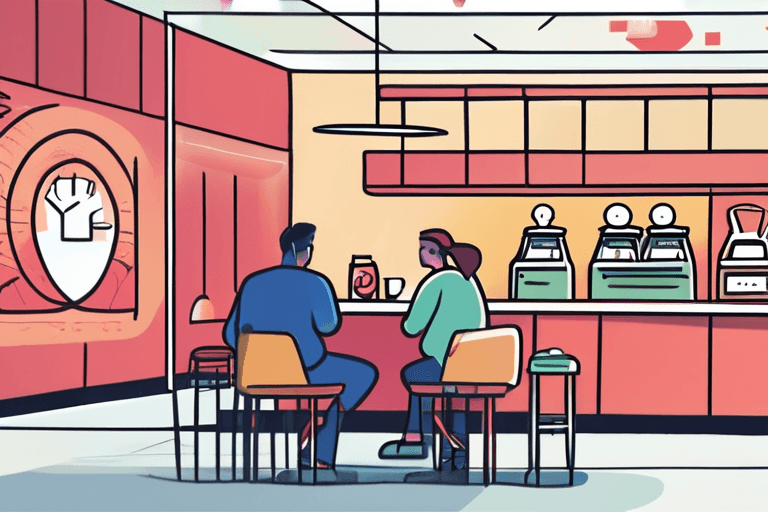
In Seattle, robot baristas are gaining popularity, challenging the traditional coffee shop experience. According to a February 1, 2026, article in The Verge, one writer found herself surprisingly impressed by a robot barista, questioning the importance of human touch in latte creation.
Allison Johnson, a senior reviewer at The Verge, visited a Seattle coffee shop and noted the abundance of coffee options in the city, passing "at least a half dozen" coffee shops on a short walk. She chose to visit a shop featuring a robot barista. Johnson admitted, "Its so embarrassing when a robot is better than you at latte art," highlighting the evolving capabilities of automated technology in everyday life.
Meanwhile, in the tech world, agentic AI is raising both excitement and security concerns. VentureBeat reported on January 30, 2026, that OpenClaw, an open-source AI assistant, had gained significant traction, reaching over 180,000 GitHub stars and attracting 2 million visitors in a week. However, this rapid growth exposed security vulnerabilities. According to Louis Columbus of VentureBeat, security researchers discovered "over 1,800 exposed instances leaking API keys, chat histories, and account credentials." Columbus emphasized that "the grassroots agentic AI movement is also the biggest unmanaged attack surface that most security tools can't see." He further explained that traditional security measures often fail when agents run on BYOD hardware, creating a significant security gap.
In other tech news, Clearspace, a Y Combinator-funded startup, is working on technology to combat compulsive phone usage. According to a Hacker News posting, Clearspace aims to "build technology as effective at protecting human attention as social media is at exploiting it." The company's mobile app has been featured in various publications, including Huberman Lab and The New York Times Wirecutter.
Separately, Wired reported on a writer's experience testing date-night boxes with Hinge dates. The writer, assigned to find the best date-night box, downloaded Hinge and embarked on a series of dates to test various products designed to help couples connect.
Finally, Ars Technica published an article discussing the trend of microdosing psychedelics for mental health benefits. The article noted that microdosing, typically with psilocybin mushrooms or LSD, is used to achieve "gentler, more stable effects" such as "boosts in mood and energy." The article contrasts this with other potential treatments such as coffee.



















Discussion
AI Experts & Community
Be the first to comment