Trump Administration Faces Growing International and Domestic Tensions
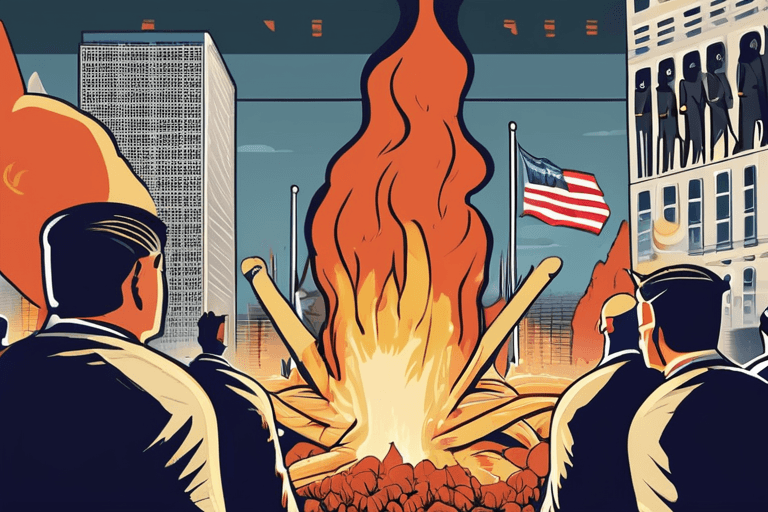
The Trump administration faced escalating tensions both domestically and internationally as of February 1, 2026. These tensions ranged from threats of military action against Iran to widespread protests against immigration policies and concerns over the future of human rights.
Internationally, President Donald Trump's foreign policy decisions were drawing increased scrutiny. Iran's Supreme Leader Ayatollah Ali Khamenei warned on Sunday that any attack by the United States would ignite a "regional war" in the Middle East, according to the Associated Press. This statement marked the most direct threat from Khamenei amid rising tensions, particularly after Trump threatened military action against the Islamic Republic. Furthermore, President Trump was actively attempting to shape a new world order, as reported by Vox, evident in actions in Venezuela, threats directed towards Greenland, Europe, and Iran, and the establishment of the Board of Peace, a new body with a billion-dollar lifetime membership fee. Some critics viewed this board as an attempt to replace the United Nations.
Domestically, the administration's immigration policies sparked widespread protests. On Friday, cities across the U.S. saw demonstrations against the Trump administration's immigration crackdown, Time reported. The protests followed the deaths of two people at the hands of federal agents during an enforcement operation in Minneapolis, Minnesota. Organizers called for a national shutdown day, urging people to abstain from school, work, and shopping. In Minneapolis, a similar state-wide general strike had occurred the previous week, demanding an end to what local leaders described as an "invasion" of federal immigration enforcement officers under "Operation Metro Surge."
Beyond specific policies, concerns were also raised about the broader implications of the Trump administration on human rights. Time magazine posed the question of whether human rights could survive the Trump era, noting that the "rules-based order that helped make human rights enforceable is fraying fast." The article suggested that a new "durable human rights alliance" might be necessary to defend core norms, even if a superpower like the U.S. defects.
Adding to the complex political landscape, the conservative movement was also experiencing internal shifts. Following the death of right-wing activist Charlie Kirk in September, his followers were reportedly drifting towards more extreme figures like Nick Fuentes, according to Vox. Kirk, who founded Turning Point USA, aimed to counter liberal indoctrination in universities. His death prompted an outpouring of grief among conservatives, with President Trump threatening a crackdown on the "radical left."

















Discussion
AI Experts & Community
Be the first to comment