Here is a news article synthesizing the provided sources:
Chile Preserves Plant Life in World's Driest Desert Through Seed Banks
In Vicuña, Chile, located in the heart of the world's driest desert, researchers are working to safeguard the future of plant life by freezing seeds in specialized seed banks. The effort, led by dedicated researchers like Ana Sandoval at the Initihuasi Seed Bank, aims to preserve biodiversity in the face of environmental challenges, according to a report by NPR Politics on February 1, 2026.
Vicuña, the birthplace of Gabriela Mistral, Chile's first Nobel laureate, faces unique challenges due to its arid climate. The seed banks serve as a crucial resource for protecting native plant species. NPR reported that the seed banks nurture the future, preserving biodiversity one sprout at a time.
In other news, gadget enthusiasts are taking note of the Xteink X4, a tiny, pocket-friendly e-reader. According to a review published by The Verge on February 1, 2026, the device presents both frustration and potential. Andrew Liszewski of The Verge noted that the Xteink X4 uses buttons instead of a touchscreen, which can be challenging, but a growing community is working to improve its functionality. Liszewski stated he has used and reviewed dozens of e-readers over the years, but the 5-inch Kobo Mini remains his favorite because it was small.
Also on February 1, 2026, The Verge highlighted M83's album "Dead Cities, Red Seas & Lost Ghosts." Terrence O'Brien noted that before M83 evolved into an 80s-inspired pop project, the band shared more similarities with Mogwai. O'Brien wrote that he listens to the album when watching snow fall.
Ars Technica published a research roundup on February 1, 2026, highlighting scientific stories that almost slipped through the cracks in January. The list included a lip-syncing robot, using brewer's yeast as scaffolding for lab-grown meat, hunting for Leonardo da Vinci's DNA in his art, and new evidence suggesting humans transported the stones to build Stonehenge from Wales and northern Scotland, rather than glaciers.
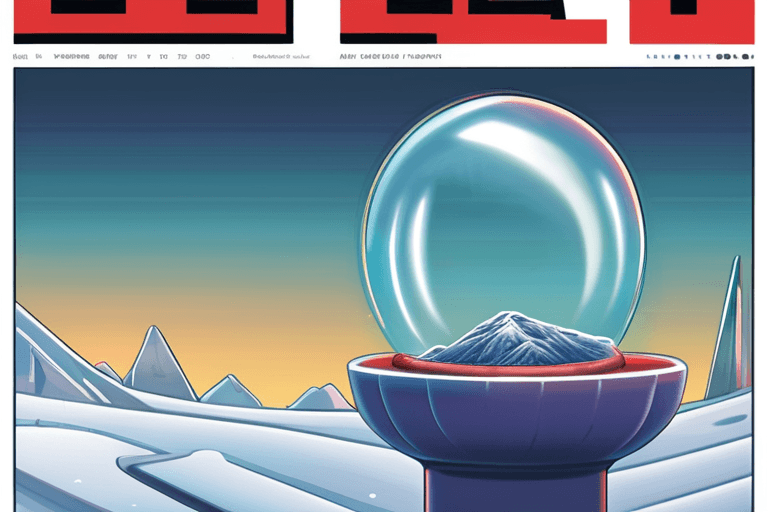
Wired published an article on February 1, 2026, detailing how to use physics to escape an ice bowl. The article explores three possible escape plans, using a physics model and animations to illustrate how they work.















Discussion
AI Experts & Community
Be the first to comment