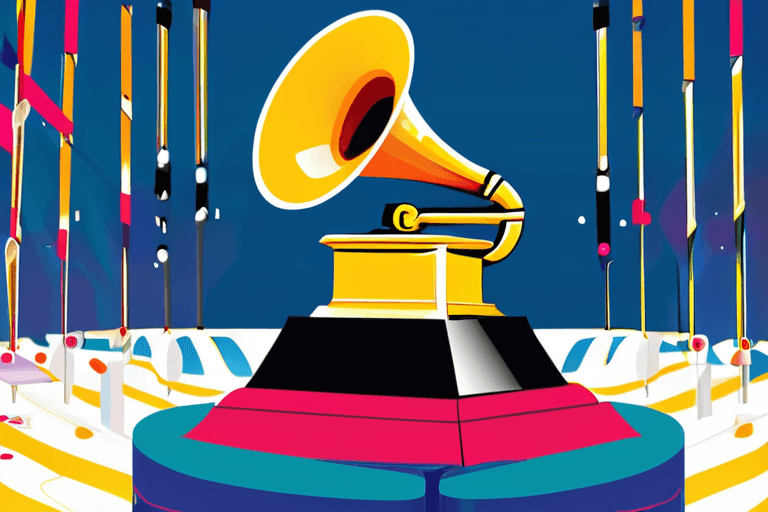
Bad Bunny's "Debí Tirar Más Fotos" won the Grammy Award for best album, marking the first time a Spanish-language album received the top honor, while Kendrick Lamar's win for record of the year for "Luther," his duet with SZA, solidified his position as the most honored rapper ever at the 68th annual Grammy Awards on Sunday. The ceremony, which featured political statements from various artists, also highlighted emerging talents and the resurgence of established performers.
A showcase of best new artist nominees featured eight performances, with Addison Rae and Katseye delivering what many considered the most captivating moments. Rae, known for her TikTok influence and pop music revivalism, performed "Fame Is a Gun" on a semi-truck loading dock. While some speculated that the segment was pre-taped and vocally enhanced, her performance was praised for its staging and confident delivery.
The Recording Academy, responsible for the Grammy Awards, has increasingly incorporated AI-driven tools in various aspects of the award process, from music production to identifying potential nominees. This trend reflects the broader integration of AI in the music industry, where algorithms are used for tasks such as composing melodies, generating lyrics, and mastering audio. The use of AI in music raises questions about originality, authorship, and the role of human creativity.
The increasing reliance on AI in the music industry has sparked debate about its potential impact on human artists. Some fear that AI could displace human musicians, while others believe that it can be a valuable tool for enhancing creativity and efficiency. The long-term implications of AI in music remain uncertain, but it is clear that the technology is transforming the industry in profound ways.

















Discussion
AI Experts & Community
Be the first to comment