Here's a news article synthesizing the information from the provided sources:
Global Markets React to US Trade Moves, Geopolitical Tensions, and Domestic Policy Decisions
Global markets experienced a week of volatility driven by a mix of international trade developments, geopolitical tensions, and domestic policy decisions in major economies. Gold and silver prices plummeted, the FTSE 100 reached a record high, the US and India agreed to tariff reductions, tensions remained high between the US and Iran, and France adopted its 2026 budget after surviving no-confidence votes.
Precious metals experienced a sharp reversal after a rally earlier in January. Spot gold recorded its sharpest one-day drop since 1983, falling more than 9 percent on Friday, according to BBC Business. Silver also plunged, dropping 27 percent before a slight recovery on Monday. The earlier rally in precious metals was attributed to investors seeking "safe haven" assets amid geopolitical uncertainties, but prices fell after Kevin Warsh was nominated to lead the US Federal Reserve, BBC Business reported.
In contrast to the precious metals decline, the FTSE 100 shrugged off a weak start to close up 1.2 percent at 10,341.56 points, a record close, according to BBC Business.
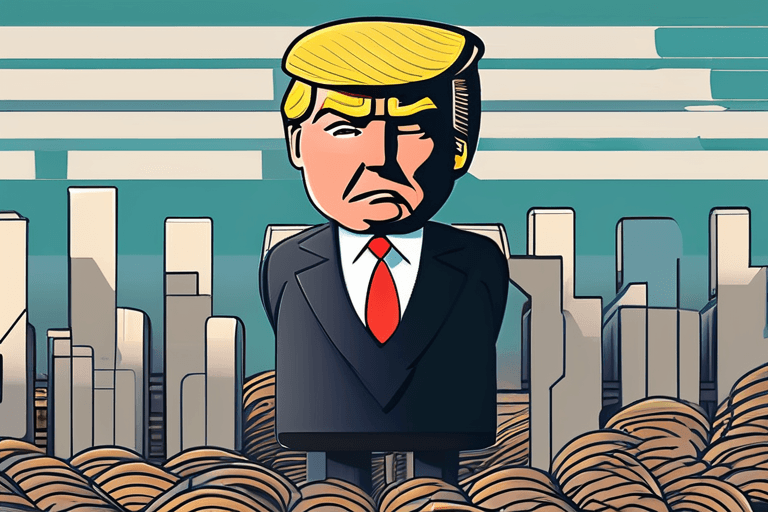
On the trade front, US President Donald Trump agreed to slash US tariffs on Indian goods from 50 percent to 18 percent, Al Jazeera reported. This reduction was reportedly in exchange for India lowering trade barriers, ceasing purchases of Russian oil, and instead buying oil from the US and potentially Venezuela. Al Jazeera noted that the previous 50 percent tariffs had negatively impacted many Indian businesses, as the United States is a key market for Indian industries. According to Al Jazeera, the agreement was made "out of friendship and respect for Prime Minister Modi and, as per his request."
Meanwhile, tensions between the US and Iran remained high. Sky News reported that the week was a "make or break" moment for averting war between the two countries. Dominic Waghorn, International affairs editor for Sky News, stated that "The next seven days could lead to conflict between Iran, the US and its allies, or the start of a diplomatic breakthrough. It is likely to be one or the other." Waghorn added that "President Trump seems to believe the Iranian government is in a hole and can only get out if it makes a deal with him."
Domestically, France adopted its long-overdue 2026 state budget after months of political gridlock, Euronews reported. The budget's adoption followed the rejection of two no-confidence motions in parliament, which were tabled in response to Prime Minister Sébastien Lecornu's decision to invoke Article 49.3 of the constitution, allowing the government to pass legislation without a vote from MPs, according to Euronews.
Adding to the global financial context, BBC Business highlighted a past conversation involving the late Alistair Darling, Chancellor of the Exchequer under Gordon Brown, and Jamie Dimon, chief executive of JP Morgan, regarding the UK government's plans to tax bankers' bonuses in 2009. The conversation, details of which reportedly appear in the Epstein files, involved a threat to pull plans for JP Morgan's new headquarters in the UK.




















Discussion
AI Experts & Community
Be the first to comment