Global Landscape Shifts as Tech and Geopolitical Tensions Rise
The world in early 2026 is marked by rapid technological advancements, escalating geopolitical tensions, and evolving societal concerns, according to various news sources. The electric vehicle (EV) market is surging, the future of tech jobs is uncertain, the potential for conflict in the Middle East looms, quantum computing research progresses, and cities grapple with immigration enforcement policies.
Electric vehicle adoption continued its rapid ascent globally, with EVs accounting for over a quarter of new vehicle sales in 2025, according to MIT Technology Review. This represents a significant increase from less than 5% in 2020. Some regions experienced even higher adoption rates, with battery electric or plug-in hybrid vehicles representing more than 50% of new car sales in China. Europe also saw purely electric vehicles outselling gas-powered ones in December. The United States, however, lagged behind, experiencing a slight sales decline from 2024.
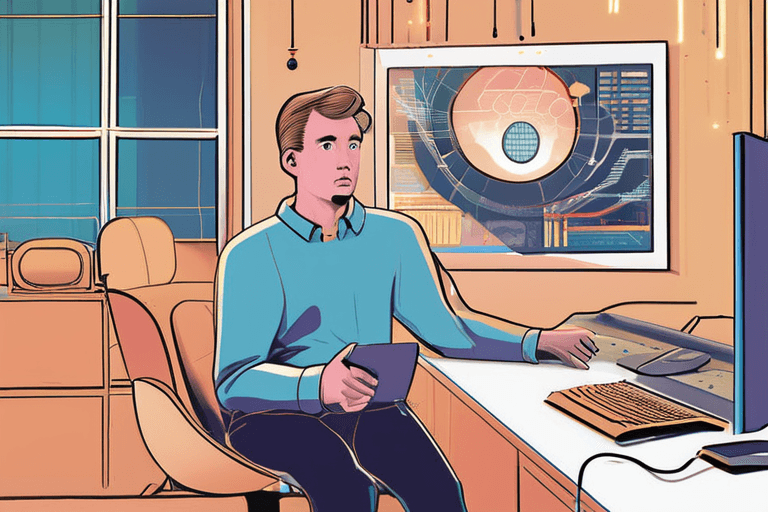
Meanwhile, the rise of artificial intelligence cast a shadow over the tech job market. Computer programming employment in the U.S. reached its lowest level since 1980 as companies increasingly automated tasks, Fortune reported. Some companies, like Anthropic, were already using AI for 100% of their coding. Yamini Rangan, the CEO of HubSpot, a $15 billion software company, admitted she doesn't know what jobs will look like in an AI-enabled future, even in as little as two years. "As things evolve every decade, new jobs will emerge," Rangan said on the Silicon Valley Girl podcast. "You cant even plan for a job that will be there 10 years from now, or 20 years from now, or even five years from now."
Geopolitical tensions remained high as Iran warned that a U.S. attack would spark a regional war, according to NPR. Ali Vaez, the Iran project director at the International Crisis Group, discussed the country's future on NPR's Morning Edition. This warning came after President Trump sent an armada to the Middle East.
In the realm of quantum computing, Nature reported on advancements in long-lived remote ion-ion entanglement for scalable quantum repeaters. Quantum networks, integrating quantum communication, quantum metrology, and distributed quantum computing, could provide secure and efficient information transfer, high-resolution sensing, and an exponential speed-up in information processing. However, the exponential photon loss in optical fibres prohibits efficient and deterministic entanglement distribution, making quantum repeaters a promising solution.
Domestically, cities across the U.S. were grappling with immigration enforcement policies. Time reported that the "ICE Out" movement was gaining momentum as cities took actions in response to the Trump Administration's policies. Minneapolis Mayor Jacob Frey, speaking at the U.S. Conference of Mayors in Washington, D.C., warned fellow city leaders about the pressure they were facing. "We are on the front line of a very important battle," Frey said. "If we do not speak up, if we do not step out, it will be your city that is next." He spoke in the wake of fatal shootings in Minneapolis.
















Discussion
AI Experts & Community
Be the first to comment