Global Landscape Marked by Tech Advancements, Political Tensions in Early 2026
The world in early February 2026 was a complex tapestry woven with threads of technological advancement, political turmoil, and economic uncertainty, according to multiple news sources. While electric vehicle adoption surged and cultural milestones were celebrated, anxieties surrounding international conflicts, immigration debates, and the potential misuse of emerging technologies loomed large.
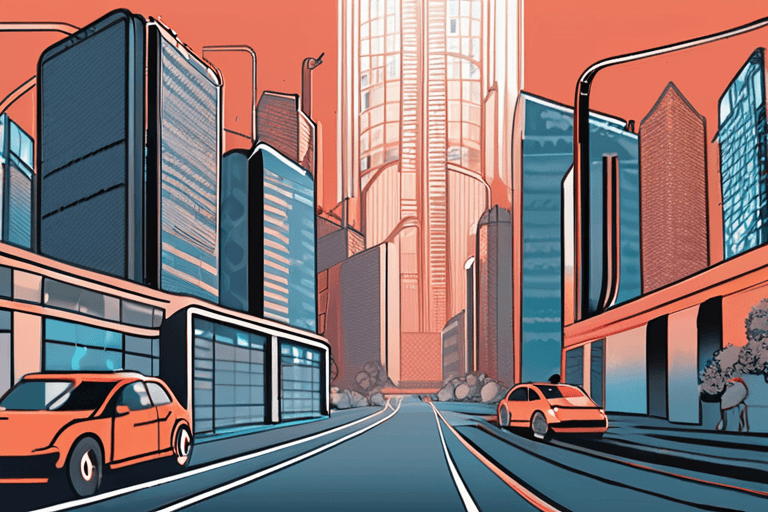
Electric vehicles (EVs) continued their rise in popularity, with EVs making up over a quarter of new vehicle sales globally in 2025, a significant increase from less than 5% in 2020, according to MIT Technology Review. Some regions experienced even higher adoption rates. In China, more than 50% of new vehicle sales last year were battery electric or plug-in hybrids. Europe also saw a surge, with more purely electric vehicles hitting the roads in December than gas-powered ones. The United States, however, lagged behind, experiencing a small sales decline from 2024, according to MIT Technology Review.
However, safety concerns regarding EVs also emerged. China will ban electronically actuated door handles on vehicles sold in the country starting in 2027, requiring mechanical releases, according to TechCrunch. This decision followed investigations into Tesla's concealed door handles and concerns about the accessibility of manual releases, potentially influencing similar regulations in other countries like the U.S., according to TechCrunch. The ban was prompted by fatal incidents where occupants were trapped, particularly in Tesla vehicles and a Xiaomi SU7 sedan, according to TechCrunch.
Meanwhile, U.S. cities grappled with immigration debates. Minneapolis Mayor Jacob Frey addressed fellow city leaders at the annual U.S. Conference of Mayors in Washington, D.C., expressing concerns about potential federal actions targeting cities. "We are on the front line of a very important battle," Frey said, according to Time. "If we do not speak up, if we do not step out, it will be your city that is next." Frey's remarks reflected a broader anxiety among mayors across the country, according to Time.
In the realm of quantum technology, advancements continued, with Nature News reporting on progress in long-lived remote ion-ion entanglement for scalable quantum repeaters. Quantum networks, integrating quantum communication, quantum metrology, and distributed quantum computing, could provide secure and efficient information transfer, high-resolution sensing, and an exponential speed-up in information processing, according to Nature News.
The multifaceted news landscape of early 2026 painted a picture of a world navigating both remarkable progress and significant challenges.
















Discussion
AI Experts & Community
Be the first to comment