Tech Industry Sees Major Moves in AI, Autonomous Vehicles, and Design Regulations
The tech world witnessed a flurry of activity on Monday, with significant developments ranging from major funding rounds in autonomous vehicles to new regulations impacting electric vehicle design and shifts in software development strategies.
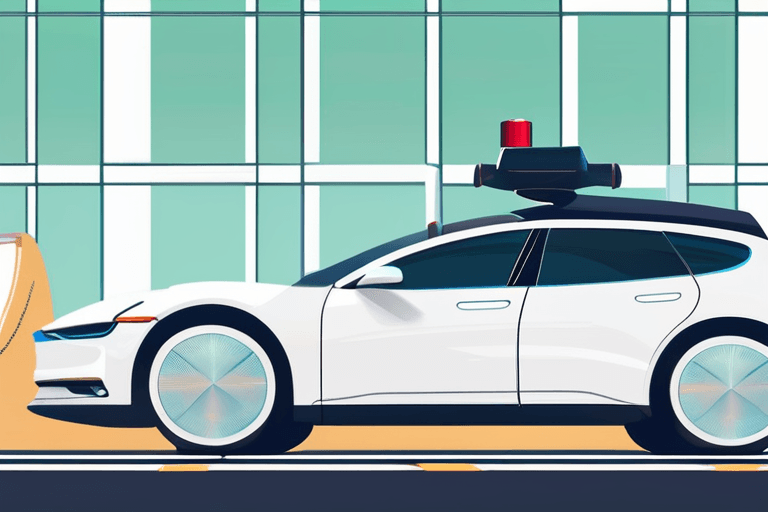
Waymo, Alphabet's autonomous vehicle company, announced it had raised $16 billion in a funding round led by Dragoneer Investment Group, DST Global, and Sequoia Capital, according to a blog post by the company. The funding will support Waymo's plans to expand its robotaxi fleet to over a dozen new cities internationally this year, including London and Tokyo. The investment values Waymo at $126 billion. Parent company Alphabet maintained its position as majority investor, with additional investments from Andreessen Horowitz, Mubadala Capital, Bessemer Venture Partners, Silver Lake, Tiger Global, T. Rowe Price, BDT MSD Partners, CapitalG, Fidelity Management & Research Company, GV, Kleiner Perkins, Perry Creek Capital, and Temas.
In other news, SpaceX acquired Elon Musk's artificial intelligence startup, xAI, the spaceflight company announced. Musk, who is also the CEO of SpaceX, stated in a memo on the rocket company's website that the merger is primarily focused on creating space-based data centers. Musk wrote that current advances in AI are dependent on large terrestrial data centers, which require immense amounts of power and cooling, and that global electricity demand for AI cannot be met with terrestrial solutions without imposing hardship on communities and the environment.
Meanwhile, in China, new safety regulations are set to impact electric vehicle design. According to new rules published by China's Ministry of Industry and Information Technology, cars sold in the country must have mechanical releases on their door handles. The regulations, which go into effect January 1, 2027, will prohibit the hidden, electronically actuated door handles popularized by Tesla and now found on numerous other electric vehicles in China. The rule dictates that each door (excluding the tailgate) should be equipped with a mechanically released external door handle, and vehicles must also have a mechanical release on the interior of the vehicle. Bloomberg previously reported on the new safety policy.
Adobe announced it will discontinue its 2D animation software, Adobe Animate, on March 1, 2026, as the company increases its investments in AI. Adobe issued an update to the company's support site and sent emails to existing customers announcing the decision. Enterprise customers can continue to receive technical support through March 1, 2029, to ease the transition, while other customers will have support through March of next year, the company said. The decision has been met with disappointment and anger among Adobe Animate users, who are concerned about the lack of alternatives that mirror Animate's functionality.
In the startup world, two Stanford students announced the launch of Breakthrough Ventures, a $2 million accelerator program aimed at funding businesses founded by college students and recent graduates nationwide. Roman Scott and Itbaan Nafi began building the accelerator program after hosting a series of popular Demo Days at Stanford starting in 2024 and decided to expand it after students were achieving success. "This fundraise turns Breakthrough from just being a seasonal accelerator into a lifelong partnership with our founders," Nafi, who is still a masters candidate at Stanford, told TechCrunch. Early last year, the duo tapped Raihan Ahmed to lead the accelerator.



















Discussion
AI Experts & Community
Be the first to comment