Here's a news article synthesizing the provided information:
Silver Prices Surge Amid Economic Uncertainty; Homeowners Tap Equity as Borrowing Option
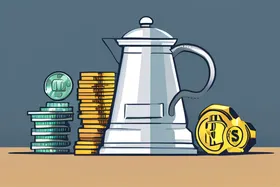
Amidst economic uncertainty and rising interest rates, silver prices have surged, increasing by more than 200% since January 2025, according to CBS News. This growth positions silver as a cost-effective alternative to gold, which has also seen significant price increases. Simultaneously, homeowners are increasingly leveraging their home equity through HELOCs and home equity loans as a potentially more affordable borrowing option compared to personal loans and credit cards, CBS News reported.
The rise in silver prices mirrors a broader trend of investors turning to precious metals as a hedge against inflation and market volatility. Gold, often viewed as a safe-haven asset, has also experienced substantial growth, surpassing numerous price records on its way toward the $5,000 per ounce mark, CBS News noted. The appeal of physical gold, such as bars and coins, lies in its historical ability to hold value, making it an attractive investment during times of economic instability.
While precious metals attract investors, homeowners are exploring alternative borrowing strategies. With average equity levels exceeding $300,000, homeowners are finding opportunities to borrow against their home equity, CBS News stated. HELOC and home equity loan interest rates are often lower than those associated with credit cards and personal loans. This becomes particularly relevant as personal loan interest rates remain around 12%, and credit card interest rates, while recently declining, remain high after reaching a record high of 23%, according to CBS News.
In other news, enterprises are rapidly adopting Retrieval Augmented Generation (RAG) to ground Large Language Models (LLMs) in proprietary data, VentureBeat reported. However, many organizations are finding that retrieval has become a foundational system dependency. Failures in retrieval can undermine trust, compliance, and operational reliability.
Additionally, a recent surge in shared excerpts from old emails on Twitter has sparked curiosity about the use of equals signs in those emails, Hacker News reported. According to Hacker News, the equals signs are not a code or an artifact of scanning and OCR, but rather a result of improper conversion of emails to a readable format. The encoding was necessary to accommodate long lines and special characters in older email systems.





















Discussion
AI Experts & Community
Be the first to comment