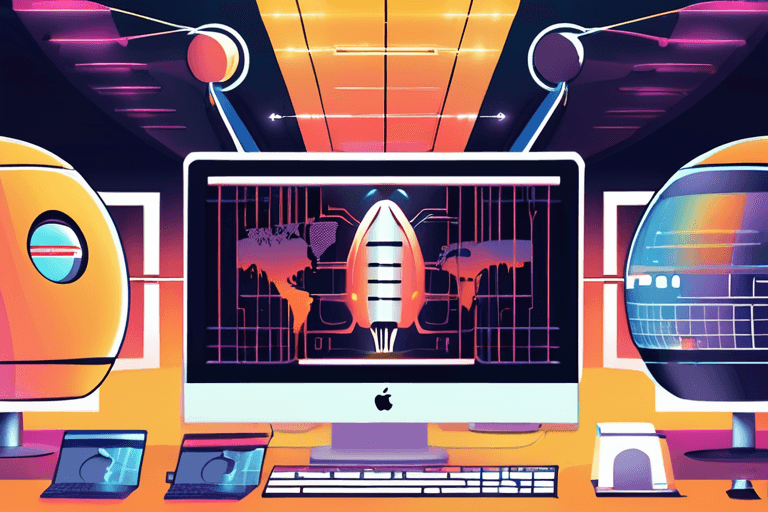
Elon Musk merged his space exploration company, SpaceX, with his artificial intelligence venture, xAI, according to an announcement made by SpaceX on Monday. The move is expected to precede a large initial public offering for the combined business later this year, Fortune reported. Musk has repeatedly stated the need to accelerate the development of technology that will allow data centers to operate in space, believing it will help overcome the high costs associated with electricity and other resources required to build and run AI systems.
The deal combines several of Musk's ventures, including the AI chatbot Grok, satellite communications company Starlink, and social media company X, Fortune noted. Musk believes that "space-based AI is obviously the only way to scale," according to Fortune.
In other news, NASA announced a delay in the launch of the Artemis II mission until March, Ars Technica reported. The delay was prompted by hydrogen leaks detected during a fueling test at Kennedy Space Center in Florida on Monday. The leaks occurred in the connection between the rocket and its launch platform. According to NASA, engineers addressed several challenges during the two-day test and met many of the planned objectives during the Wet Dress Rehearsal (WDR). To allow teams to review data and conduct a second WDR, NASA is now targeting March as the earliest possible launch opportunity.
Meanwhile, OpenAI released a new desktop application for its Codex artificial intelligence coding system for macOS, VentureBeat reported. The application functions as a "command center for agents," allowing developers to delegate multiple coding tasks simultaneously, automate repetitive work, and supervise AI systems that can run independently for up to 30 minutes before returning completed code, according to OpenAI executives. Sam Altman, OpenAI's chief executive, told VentureBeat that the Codex app is "the most loved internal product we've ever had."
In Michigan, a new process is being tested at the Eagle Mine to extract more nickel from lower-quality ore, MIT Technology Review reported. The mine, the only active nickel mine in the US, is nearing the end of its life. Allonnia, a startup, developed a fermentation-derived broth that is mixed with concentrated ore to capture and remove impurities. Kent Sorenson, Allonnia's chief technology officer, said this approach could help companies continue operating sites that have declining nickel concentrations.
Finally, KDE's upcoming Plasma Login Manager will not support systemd-free Linux distributions or BSD systems, Hacker News reported. The new login manager, scheduled for release on February 17 in Plasma 6.6, is designed as a successor to SDDM. KDE developers framed it as deeply integrated into the Plasma stack itself, with the goal of modernizing the login process. However, this integration comes with limitations for users of systemd-free systems.


















Discussion
AI Experts & Community
Be the first to comment