Here's a news article synthesizing the provided information:
U.K. Investigates Former Ambassador Mandelson Over Alleged Epstein Leaks
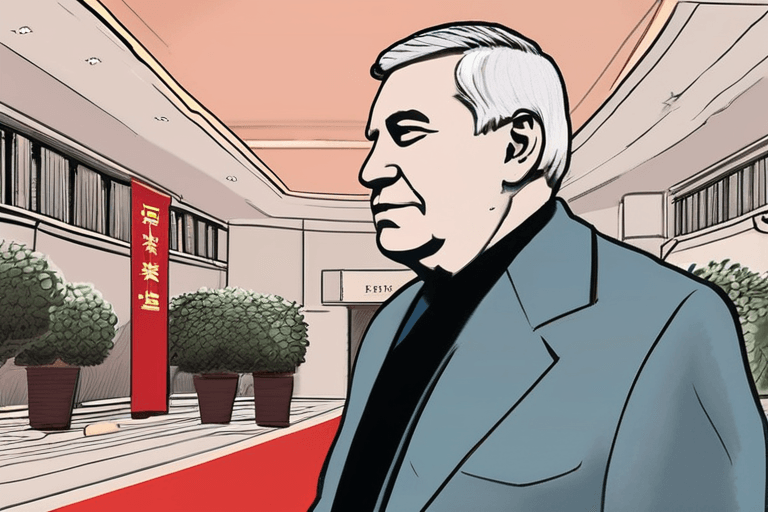
British police launched a criminal investigation into Peter Mandelson, the U.K.'s former ambassador to the U.S., on Tuesday, February 3, 2026, over alleged misconduct in public office related to his relationship with convicted sex offender Jeffrey Epstein, according to the Associated Press. The investigation stems from newly released Epstein files that suggest Mandelson, a former Cabinet minister and elder statesman, may have been involved in inappropriate activity.
The U.K. government stated that the files prompted the investigation. Mandelson served as the British Ambassador to the U.S.
Trump Announces Lower Tariffs on India
In other news, President Trump announced a new trade deal with India that would lower tariffs on the country to 18%, according to NPR. The announcement, made on February 3, 2026, followed months of trade tensions between the two nations. "After months of tensions, the United States and India may be inching back together after President Trump announced a new trade deal," NPR's Diaa Hadid reported from Mumbai.
U.S. Launches "Project Vault" to Secure Critical Mineral Supply Chain
Meanwhile, in the U.S., the White House and the U.S. Export-Import Bank launched "Project Vault," a new critical minerals stockpile, on February 2, 2026, according to Fortune. Industry analysts described the initiative as a necessary "first step of many" to break China's supply-chain dominance of minerals, including rare earths. The plan for the emergency national stockpile follows the Trump administration's direct investments in several U.S. and Canadian critical minerals mining and processing companies over the past 10 months. Supply-chain disruptions, exacerbated by the COVID-19 pandemic and trade tensions with China, prompted the move.
Study Finds Microbes Drive Winter-to-Spring Nitrogen Pulse
In environmental news, a study published on February 3, 2026, revealed that microbes under snowpacks drive a winter-to-spring nitrogen pulse, according to Phys.org. The research, conducted by Anna Gray at the University of Rhode Island, found that a hidden workforce of soil microbes blooms and crashes beneath winter snow, shaping how nitrogen fuels spring ecosystems. "Unlike many plants or some animals, an entire world of activity is unfolding," the study noted.















Discussion
AI Experts & Community
Be the first to comment