Silicon Valley was shaken by a series of events in early 2026, including the emergence of a novel AI social network, a supply chain attack targeting the Notepad++ text editor, and discussions surrounding space-based data centers.
The AI social network, Moltbook, captured attention for its unique characteristic: it was populated by AI agents. Bryan Walsh of Vox's Future Perfect section reported on February 2, 2026, that these AI agents had even started a religion within the network, sparking considerable interest and concern in Silicon Valley.
Meanwhile, developers of Notepad++, a popular text editor, announced on February 2, 2026, that their update infrastructure had been compromised between July and October 2025. According to their statement, the breach stemmed from a hosting provider level incident that occurred from June to September 2025, but attackers maintained access to internal services until December 2025. Kaspersky researchers identified multiple execution chains and payloads used in the attack, which targeted a small number of machines across different countries, according to Hacker News reports.
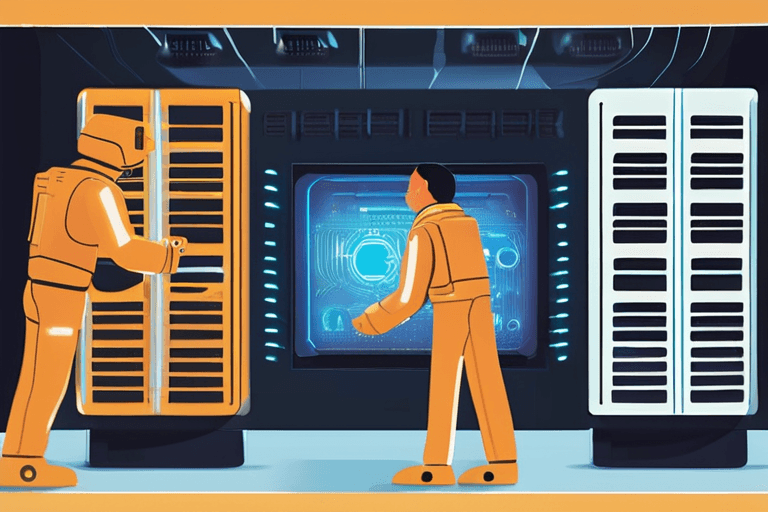
Separately, the feasibility of launching data centers into space was being debated, fueled by Elon Musk's decision to have SpaceX take over his AI company, xAI. Phys.org reported on February 4, 2026, that tech firms were exploring the idea of building data centers in space to tap into the sun's energy, driven by the increasing power demands of artificial intelligence.
In other AI developments, a production-ready Model Context Protocol (MCP) server, Ghidra MCP Server, was released, bridging Ghidra's reverse engineering capabilities with modern AI tools. According to Hacker News, the server boasts 132 endpoints, cross-binary documentation transfer, batch analysis, and headless mode for AI-powered reverse engineering. The server offers full MCP compatibility, with 110 MCP tools available for binary analysis.
Microsoft's past attempts to integrate live information widgets into Windows, dating back to 1997, have informed the design of current widget architecture, specifically addressing vulnerabilities identified in previous iterations, according to multi-source reports.
















Discussion
AI Experts & Community
Be the first to comment