Kilo, an AI coding startup, launched Kilo CLI 1.0, a command-line tool supporting over 500 AI models, on February 4, 2026, according to VentureBeat. The release, backed by GitLab co-founder Sid Sijbrandij, aims to provide developers with flexibility by not restricting them to a single development environment or AI model.
The launch of Kilo CLI 1.0 followed the release of Kilo's Slackbot, which allows developers to ship code directly from Slack, powered by MiniMax, a Chinese AI startup, VentureBeat reported. This Slackbot was launched weeks prior to the Kilo CLI 1.0 release.
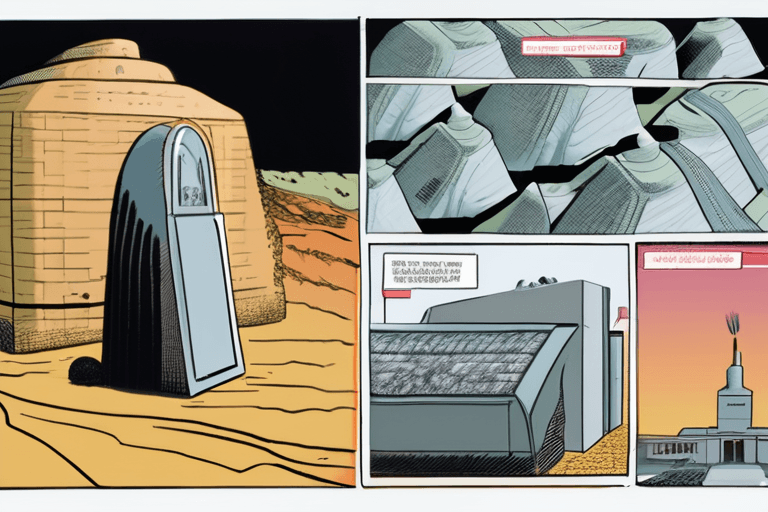
The increasing demand for metals like nickel, copper, and rare earth elements, driven by the growth of data centers, electric cars, and renewable energy projects, is creating challenges for miners, according to MIT Technology Review. The article noted that miners have already exploited the best resources.
MIT Technology Review also highlighted the potential of next-generation nuclear power plants to power the energy-intensive data centers required for AI. These plants could be cheaper to construct and safer to operate than their predecessors.
In a separate development, a user on Hacker News shared "ElCity," a SimCity clone written in Emacs Lisp. The project is a turn-based city builder that runs entirely inside Emacs, using an ASCII-based UI. The developer, vkazanov, stated that the core simulation is deterministic and pure, while the UI handles rendering and input.
MIT Technology Review also published an article discussing AI security guidance, emphasizing the need to treat agents like powerful, semi-autonomous users and enforce rules at the boundaries where they interact with identity, tools, data, and outputs. The article provided an eight-step plan for CEOs to implement and report against to govern agentic systems at the boundary.




















Discussion
AI Experts & Community
Be the first to comment