Here's a news article synthesizing the provided information:
Trump Rule Change Raises Concerns About Politicization of Federal Workforce
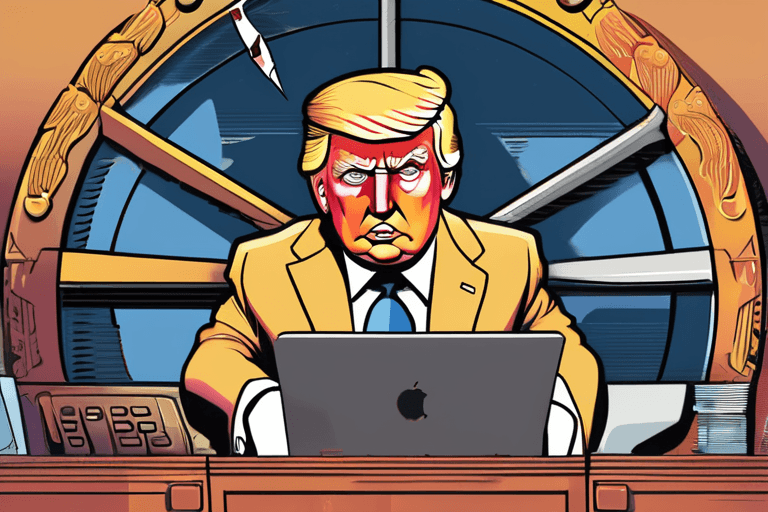
WASHINGTON, D.C. - A new rule issued by the Office of Personnel Management will make it easier for a future President Trump to fire federal employees, potentially removing job protections for an unspecified number of civil servants starting March 9, according to NPR News. The rule change, finalized despite public opposition, allows for converting positions to at-will employment, sparking concerns about the politicization of the civil service.
The rule change has ignited debate, with proponents arguing it will improve accountability within the federal workforce. However, critics fear the shift could lead to politically motivated firings, undermining the non-partisan nature of the civil service and potentially disrupting governmental continuity.
In other news, the world is watching the ongoing nuclear talks between the U.S. and Iran. Former National Security Adviser Jake Sullivan spoke with NPR's Steve Inskeep about the negotiations ahead of Friday's talks in Oman, according to NPR Politics. The details of the discussions remain closely guarded.
Meanwhile, in the realm of business, Fortune magazine's "Fortune 500 Power Moves" column tracked executive shifts within the highest ranks of Fortune 500 companies between January 31 and February 6, 2026. The column highlighted appointments, promotions, resignations, and retirements across various sectors, including CEOs, CFOs, CHROs, and CMOs.
The application of Artificial Intelligence continues to reshape various industries. In the biotech space, AI is being used to accelerate drug discovery, but the biggest problem in bringing new medicine to patients has been the running of clinical trials, which can take years and cost hundreds of millions of dollars, according to Ben Liu, CEO of Formation Bio, as reported by Time.
Finally, the impact of conflict continues to be felt globally. The Donetsk National Technology University in Ukraine was forced to relocate after the Russian invasion, according to Nature News. Viktoriya Voropayeva, a systems engineer and vice-rector at the university, recalled the difficult decision to leave their original location, hoping the relocation would only be temporary.













Discussion
AI Experts & Community
Be the first to comment