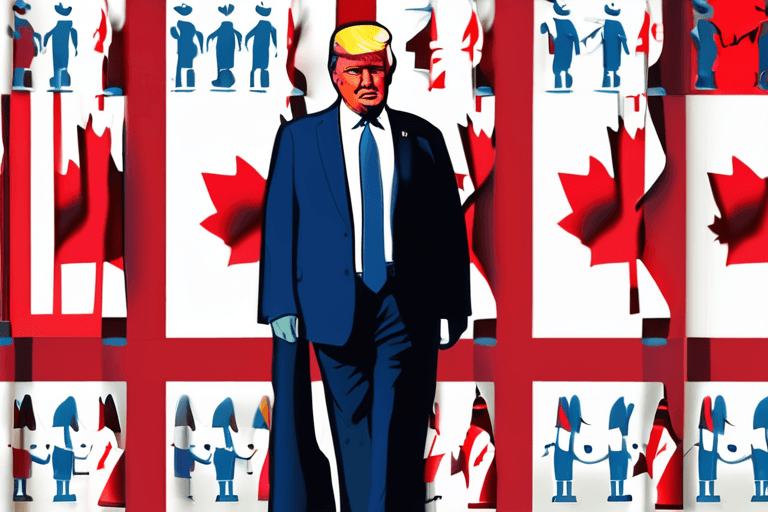
Canada and France opened consulates in Greenland on Friday, a move seen as a show of support for Denmark and the Arctic island after the United States previously expressed interest in acquiring the territory. The opening of the diplomatic outposts in Nuuk comes after US President Donald Trump reportedly considered securing control of the semi-autonomous island.
A delegation of senior Canadian officials, including Governor General Mary Simon and Foreign Minister Anita Anand, traveled to Nuuk to formally open Canada's consulate, accompanied by a Canadian Coast Guard ship, according to BBC World. Canada had previously promised to open a consulate in Nuuk in 2024, before Trump's discussions of a US takeover, as reported by The Guardian. Prior to the opening of the Canadian consulate, only Iceland and the United States had a full diplomatic presence in Greenland, according to BBC World.
The move by Canada and France is viewed as a response to the US's previous interest in Greenland. The opening of the consulates demonstrates solidarity with Denmark, a NATO ally, and the people of Greenland. Simon stated that Canada "stands firmly in support of the people of Greenland," according to BBC World.
In other news, at least eight current and former Toronto police officers were arrested following an investigation that exposed the reach of organized crime into Canada's largest municipal police force, according to The Guardian. The investigation revealed links to bribes, the drug trade, and a murder plot.
Meanwhile, in Caracas, Alex Saab, a close associate of the deposed Venezuelan president Nicolás Maduro, was reportedly detained during a joint operation by Venezuela's intelligence agency and the FBI, according to The Guardian. Saab, a wealthy Colombian-Venezuelan businessman, could potentially be extradited to the US in the coming days. The FBI and Venezuela's intelligence agency also reportedly arrested billionaire media mogul Raúl Gorrín at the same address.
In the UK, the public body UK Research and Innovation (UKRI), which spends £8 billion annually on research and innovation, faces "hard decisions" as it pauses new grants, according to BBC Technology. Ian Chapman, the head of UKRI, warned that the government had instructed the organization to "focus and do fewer things better," which "will result in negative outcomes for some." The changes are expected to be fully implemented by the end of the year.

















Discussion
AI Experts & Community
Be the first to comment