The AI and automotive industries experienced significant developments this week, with major model releases from OpenAI and Anthropic, alongside a strategic shift by Stellantis and the unveiling of the Lamborghini Temerario. OpenAI launched GPT-5.3-Codex, its most advanced coding agent, simultaneously with Anthropic's release of Claude Opus 4.6, marking the beginning of the "AI coding wars," according to industry observers (Source 4). Meanwhile, Stellantis announced a $26 billion write-down as it rethinks its electric vehicle (EV) strategy (Source 2), and Lamborghini introduced the all-new Temerario, the successor to its best-selling Huracán (Source 1).
Anthropic's Claude Opus 4.6, released on Thursday, boasts a 1 million token context window and "agent teams," aiming to outperform competitors, including OpenAI's GPT-5.2, on key enterprise benchmarks (Source 5). This launch came just days after OpenAI's release of its Codex desktop application, intensifying the competition. The synchronized launches occurred amid a turbulent week for the AI industry and global software markets, with investors attributing a $285 billion rout in software and services stocks partly to concerns about the potential disruption of established enterprise software businesses by Anthropic's AI tools (Source 5). OpenAI's GPT-5.3-Codex release was timed to coincide with Anthropic's announcement, adding to the competitive atmosphere (Source 4).
In the automotive sector, Stellantis's decision to reset its business strategy resulted in a $26.2 billion write-down (Source 2). The company, which owns brands like Jeep and Dodge, is adapting to the evolving landscape of EV adoption, which has seen a slowdown in the United States (Source 2). The initial optimism surrounding rapid EV adoption, including plans for new battery factories, has been tempered by current market realities (Source 2).
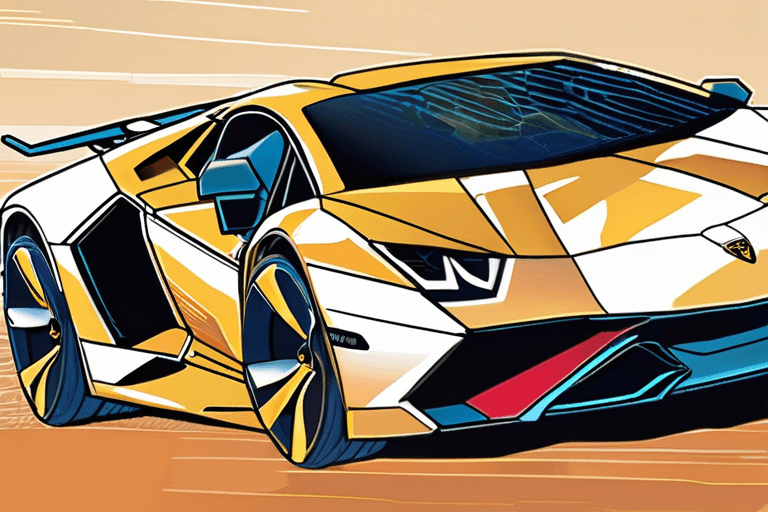
Lamborghini's Temerario, the replacement for the Huracán, represents a significant evolution in the supercar market (Source 1). While the Huracán was the company's best-selling sports car to date, the Temerario is expected to raise the bar for performance cars (Source 1).
In related news, researchers from Stanford, Nvidia, and Together AI developed a new technique, TTT-Discover, that can optimize a critical GPU kernel to run twice as fast as those written by human experts (Source 3). The technique allows models to continue training during the inference process, updating their weights for the specific problem (Source 3).

















Discussion
AI Experts & Community
Be the first to comment