The artificial intelligence and automotive industries saw significant developments this week, with major model releases from AI giants Anthropic and OpenAI, alongside a strategic shift by Stellantis and the unveiling of Lamborghini's new supercar. Anthropic launched Claude Opus 4.6, while OpenAI released GPT-5.3-Codex, sparking what industry observers are calling "AI coding wars," according to VentureBeat. Simultaneously, Stellantis announced a $26 billion write-down as it rethinks its electric vehicle strategy, and Lamborghini introduced the Temerario, the successor to its bestselling Huracán.
Anthropic's Claude Opus 4.6, released on Thursday, boasts a 1 million token context window and "agent teams," aiming to outperform competitors, including OpenAI's GPT-5.2, on key enterprise benchmarks, VentureBeat reported. This launch coincided with OpenAI's release of GPT-5.3-Codex, its most capable coding agent to date. The synchronized launches are seen as the opening salvo in the AI coding wars, a high-stakes battle to capture the enterprise software development market. The dueling announcements occurred amid a heated week between the two AI giants, who are also set to air competing Super Bowl advertisements on Sunday.
The AI competition extends beyond model releases. Researchers from Stanford, Nvidia, and Together AI developed a new technique, Test-Time Training to Discover (TTT-Discover), that optimizes GPU kernels. This technique allowed the model to continue training during the inference process and update its weights for the problem at hand, VentureBeat reported. TTT-Discover optimized a critical GPU kernel to run twice as fast as the previous state-of-the-art written by human experts.
In the automotive sector, Stellantis announced a $26.2 billion write-down as it adapts to the evolving electric vehicle market. The company, which owns brands like Jeep and Dodge, is resetting its business strategy, according to Ars Technica. The industry's initial optimism for rapid EV adoption is unwinding, with Stellantis's move reflecting a shift in the market.
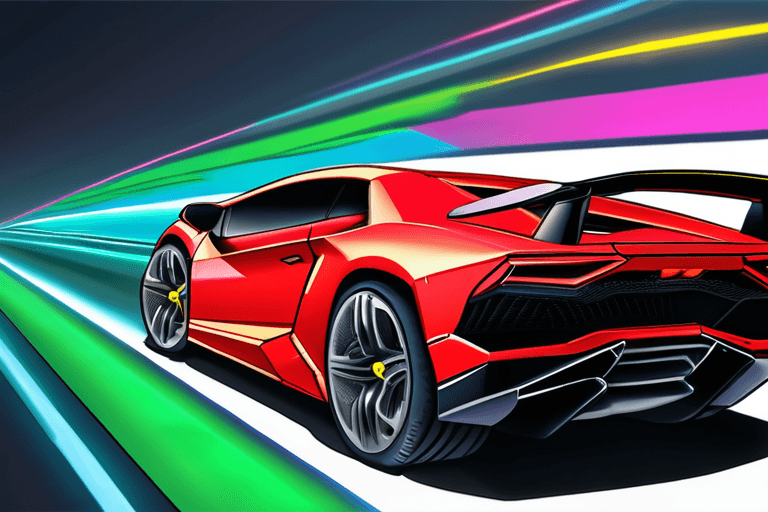
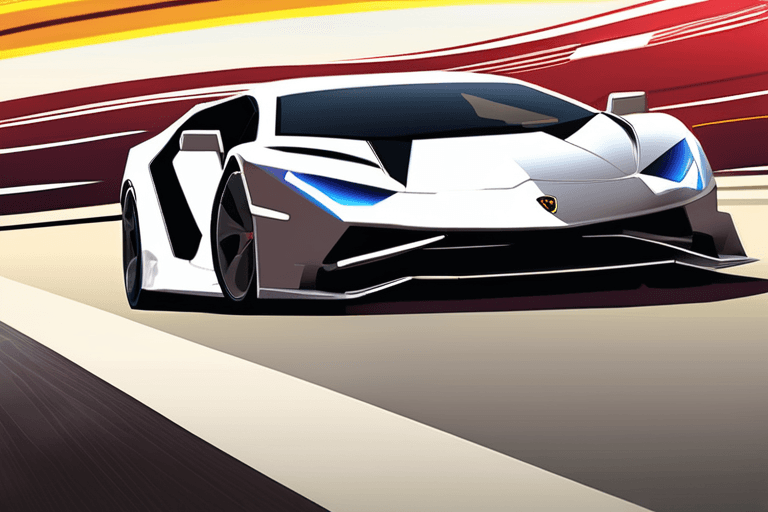
Lamborghini also made headlines with the unveiling of the Temerario, the successor to the Huracán. Ars Technica noted that the Temerario is an all-new performance car, designed to replace Lamborghini's bestselling sports car. While the initial appearance might seem more subdued than its predecessor, the Temerario represents a significant evolution in supercar design.


















Discussion
AI Experts & Community
Be the first to comment