New York is poised to become the latest state to consider a pause on data center development, as lawmakers introduce a bill for a three-year moratorium. This move, announced Friday, reflects a growing bipartisan backlash against data center expansion, with New York joining at least five other states in considering similar legislation.
According to state senator Liz Krueger, a Democrat, who presented the bill, "Data center moratoriums are being tested as a model throughout states in this country." The bill's cosponsor, assembly member Anna Kelles, also a Democrat, echoed this sentiment.
Meanwhile, the automotive industry continues to grapple with the evolving landscape of electric vehicle (EV) adoption. Stellantis, the parent company of brands like Jeep and Dodge, announced a $26.2 billion write-down to adapt its business to the current reality. This shift comes after a period of optimism surrounding EV adoption, including ambitious plans for charging infrastructure and new battery factories.
In the realm of space exploration, Blue Origin engineers are revisiting the long-standing debate surrounding the reusability of the New Glenn rocket's second stage. The discussion, which dates back to the early 2010s, mirrors similar economic considerations faced by SpaceX regarding its Falcon 9 rocket. While the first stage of New Glenn is designed to be fully reusable, the economics of reusing the upper stage, powered by two BE-3U engines, remain a key consideration.
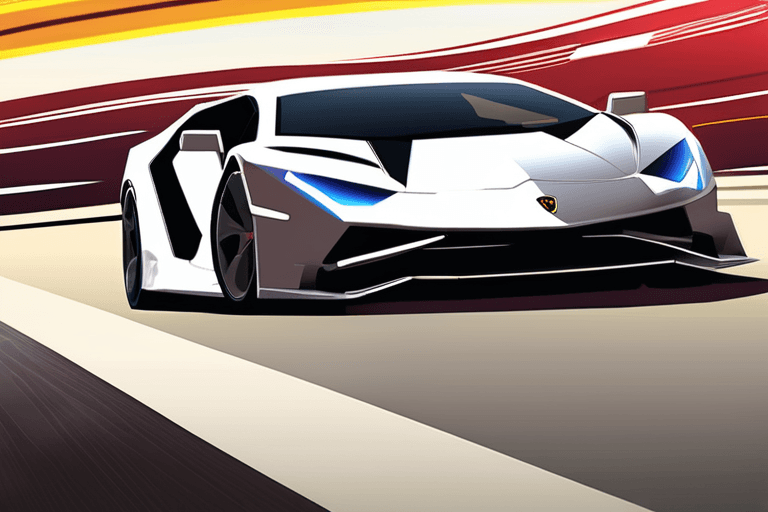
In other news, the 2026 Lamborghini Temerario is set to debut as the replacement for the Huracán, the company's best-selling sports car to date. This all-new model represents a significant evolution in the supercar market, where platforms often remain unchanged for extended periods.
Finally, researchers from Stanford, Nvidia, and Together AI have developed a new technique called Test-Time Training to Discover (TTT-Discover) that can optimize GPU kernels. This technique allows models to continue training during the inference process, resulting in significant performance gains. For example, TTT-Discover optimized a critical GPU kernel to run twice as fast as the previous state-of-the-art written by human experts.













Discussion
AI Experts & Community
Be the first to comment