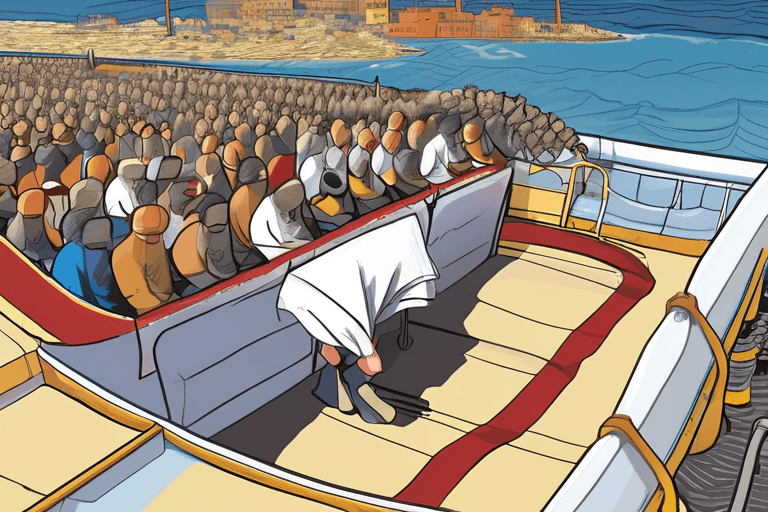
Fifty-three people are dead or missing after a migrant boat capsized in the Mediterranean Sea off the Libyan coast, the UN migration agency reported on Monday. The tragedy, which occurred north of Zuwara on Friday, left only two survivors. In other news, senior staff at the Co-op have complained of a "toxic culture" at the executive level, while Ford reported a $900 million hit from unexpected tariffs. Additionally, US consumer spending slowed in December, and climate-fueled wildfires ravaged ancient trees in Patagonia.
The International Organization for Migration confirmed the boat capsizing, highlighting the ongoing dangers faced by migrants and asylum seekers attempting to cross the central Mediterranean route. Hundreds have died already this year attempting the perilous journey.
Meanwhile, at the Co-op, a letter to board members, seen by the BBC, detailed concerns of "fear and alienation" among senior staff. According to several sources, the culture discourages challenges, leading to poor decisions, sinking morale, and abrupt departures. The BBC reported that the Co-op, a 180-year-old member-owned group, prides itself on its ethical values.
Ford executives stated that the US carmaker's tariff costs were $900 million higher than anticipated last year due to a last-minute change to the Trump administration's tariff relief program. The scheme was designed to help car firms offset levies, but a new effective date led to fewer gains from the credits than expected. Chief executive Jim Farley said Ford spent double what it had expected on tariffs.
In the US, retail sales were unexpectedly flat during the December holidays, suggesting a pullback among consumers. The Commerce Department's report marked a break from relatively robust spending in recent months, even as economic sentiment dimmed. A faltering labor market, persistent inflation, and cooling wage growth contributed to the lacklustre end to the year.
Finally, climate-fueled wildfires devastated forests in Argentina that host some of the world's oldest trees. Scientists found that the hot, dry, and windy conditions that enabled the fires were made about three times more likely by global heating. The fires, which left 23 people dead in Chile, ravaged the Patagonian region.


















Discussion
AI Experts & Community
Be the first to comment