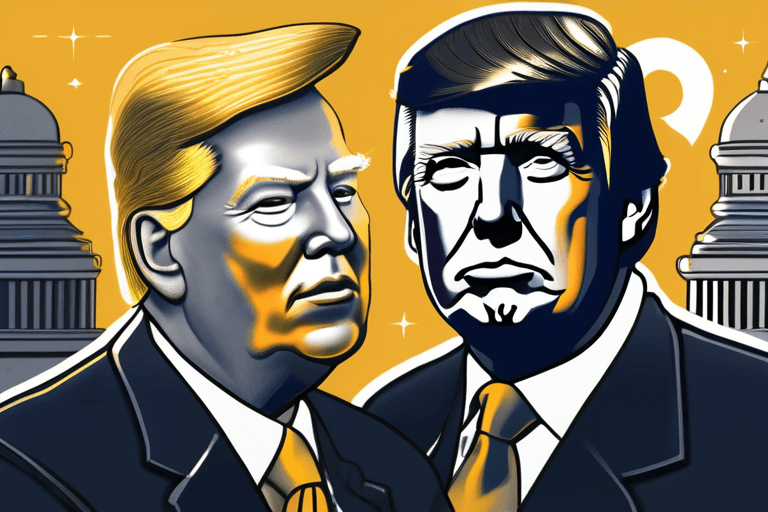
President Trump, recently awarded the "Undisputed Champion of Clean, Beautiful Coal" trophy by a fossil-fuel lobbying group, ordered the military to make agreements with coal power plants, according to Ars Technica. This move is the latest in his efforts to revive the US's most polluting source of electricity. Meanwhile, the price of gold and real interest rates are showing a scrambled relationship, according to Apollo chief economist Torsten Slok, indicating investor jitters about the economy. Elsewhere, Chinese tech platforms are expanding into Southeast Asia, and Big Oil is increasing global exploration outside of the Americas.
Trump's executive order, as reported by Ars Technica, aims to boost the fortunes of coal, which is the second most expensive source of power for the US grid, surpassed only by nuclear power. Coal also produces the most pollution, including damaging particulates and chemicals that contribute to acid rain.
In the financial sector, the usual inverse correlation between gold prices and real interest rates has broken down, as noted by Slok in a blog post on Monday, according to Fortune. This shift began when the Federal Reserve started raising interest rates in 2022. Gold is typically considered a safe-haven asset.
Chinese tech platforms are also making moves. Xiaohongshu, known internationally as RedNote, is gaining traction in Southeast Asia, with Malaysia being its second-largest market outside of China, according to Fortune. Other Chinese tech giants are also boosting digital offerings in the region. In 2025, China's trade surplus from digital services jumped to a record high of $33 billion, according to data from the State Administration of Foreign.
Big Oil is also embracing exploration outside of the Americas again. Chevron announced its return to Libya on February 11, after 15 years away, according to Fortune. The industry's biggest producers had previously cut spending on global efforts, focusing on the U.S. shale boom.
Finally, in the realm of electric vehicles, EVs are gaining ground globally, but face challenges in Africa, according to MIT Technology Review. Some regions have limited grid and charging infrastructure. However, a recent study in Nature Energy found that EVs could be cheaper to own than gas-powered vehicles in Africa by 2040.
















Discussion
AI Experts & Community
Be the first to comment