AI's rapid advancements are making waves across various sectors, from cybersecurity to the job market, with experts and industry leaders grappling with the implications. Recent developments include the rise of more affordable and powerful AI models, the potential for AI to disrupt knowledge work, and the evolving landscape of online crime.
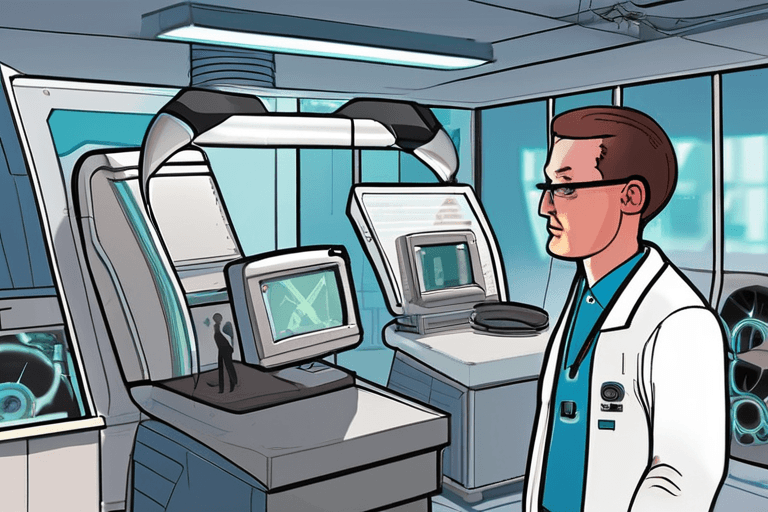
In late August of the previous year, cybersecurity researcher Anton Cherepanov discovered a new strain of ransomware, a type of malware that encrypts files on a victim's system, according to MIT Technology Review. The file was uploaded to VirusTotal, a site used by researchers to analyze potential malware. The ransomware's unique characteristics set it apart from previous examples, highlighting the evolving sophistication of cyber threats.
Simultaneously, the AI industry is witnessing significant shifts. Chinese companies are increasingly delivering AI models that rival Western counterparts in performance, but at a fraction of the cost, as reported by MIT Technology Review. For example, the Chinese firm Moonshot AI released its latest open-weight model, Kimi K2.5, which nearly matched the performance of Anthropic's Claude Opus on some benchmarks, but at one-seventh the price. Alibaba's Qwen family of models has also surpassed Meta's Llama on Hugging Face.
The potential impact of AI on the job market is also a major talking point. AI influencer Matt Shumer's viral blog post on X, which garnered over 55 million views, warned of AI's potential to disrupt and automate knowledge work, according to Fortune. Shumer's essay, written in a "breathless tone," served as a warning to friends and family about the impending changes to their jobs. He noted that the release of new AI models, such as GPT-5.3-Codex from OpenAI and Opus 4.6 from Anthropic, signaled a turning point.
The CEO of Google DeepMind, Demis Hassabis, is also navigating the fast-paced world of AI. Hassabis, who sold his AI company DeepMind to Google in 2014, juggles his role at Google with another job, working unusual hours to maximize his productivity, according to Fortune. "I do try and get six hours, but I have unusual sleeping habits I sort of manage during the day," he said on Fortunes Titans and Disruptors of Industry podcast.
These developments highlight the multifaceted nature of AI's impact, from the evolving threat landscape in cybersecurity to the economic and societal implications of AI-driven automation.













Discussion
AI Experts & Community
Be the first to comment