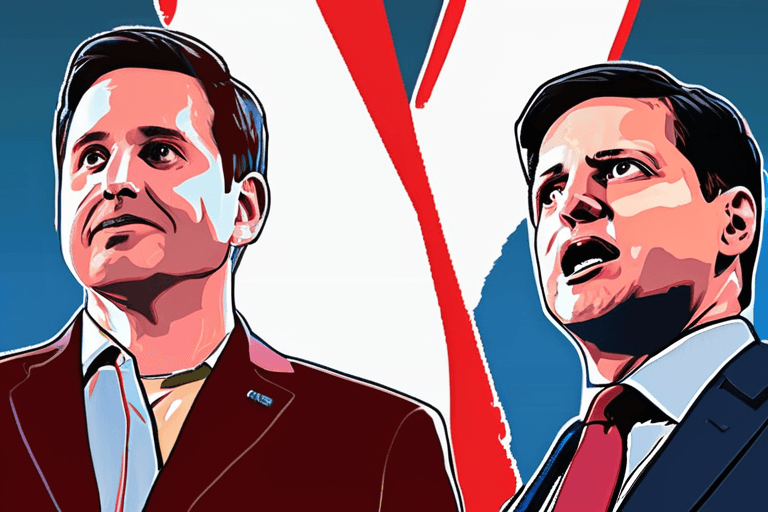
Marco Rubio, the Secretary of State, delivered a key foreign policy speech in Munich, Germany, on Saturday, emphasizing the United States' desire to revitalize its relationship with Europe. Speaking at the Munich Security Conference, Rubio stated that the U.S. and Europe share a long history and "belong together," a message some European leaders viewed as an olive branch.
The speech comes at a time when U.S.-European relations have been strained, according to Time. Rubio's address served as a contrast to an antagonistic appearance by Vice President J.D. Vance at the same forum the previous year. Rubio highlighted the intertwined destinies of the U.S. and Europe, citing the two world wars of the 20th century as a reminder of their shared history.
Meanwhile, other news developments were also making headlines. NPR's London correspondent, Lauren Frayer, reflected on covering Britain with the legacy of empire in view, having previously been based in Mumbai, India. According to NPR, Frayer was always aware of being a white Westerner in a country with an Anglo-colonial history.
In the U.S., Presidents Day, observed on the third Monday of February, was being recognized. This federal holiday honors the birthday and legacy of the first U.S. President, George Washington. Lindsay Chervinsky, executive director of the George Washington Presidential Library at Mount Vernon, told Time that the day provides "a really good opportunity to reflect on the origins of the presidential office."
Other news sources, such as Variety and MIT Technology Review, highlighted a diverse range of topics. Variety reported on Britain's colonial legacy, reactions to criminal cases, and discussions on longevity research, alongside entertainment news. MIT Technology Review focused on US Deputy Health Secretary Jim O'Neill's focus on longevity research and the Epstein files.













Discussion
AI Experts & Community
Be the first to comment