Four astronauts from NASA's Crew-12 mission successfully docked at the International Space Station on Saturday, February 14, 2026, while in the realm of artificial intelligence, Nvidia announced significant advancements in large language model (LLM) efficiency. Simultaneously, NPR reported on the ongoing legacy of colonialism in London, as well as innovations in musical instrument design.
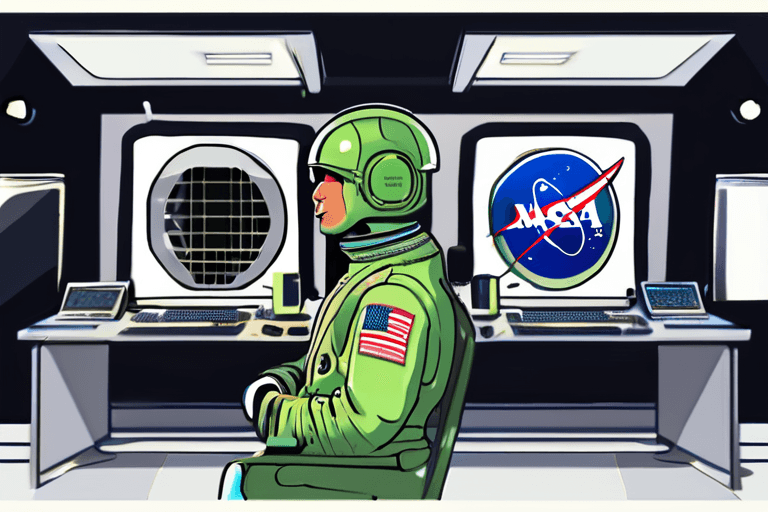
The Crew-12 mission, which launched from Cape Canaveral, Florida, on Friday morning, included NASA astronauts Jessica Meir and Jack Hathaway, French astronaut Sophie Adenot, and Russian cosmonaut Andrei Fedyaev. According to NASA, the SpaceX Dragon capsule carrying the crew approached the ISS for docking on Saturday afternoon.
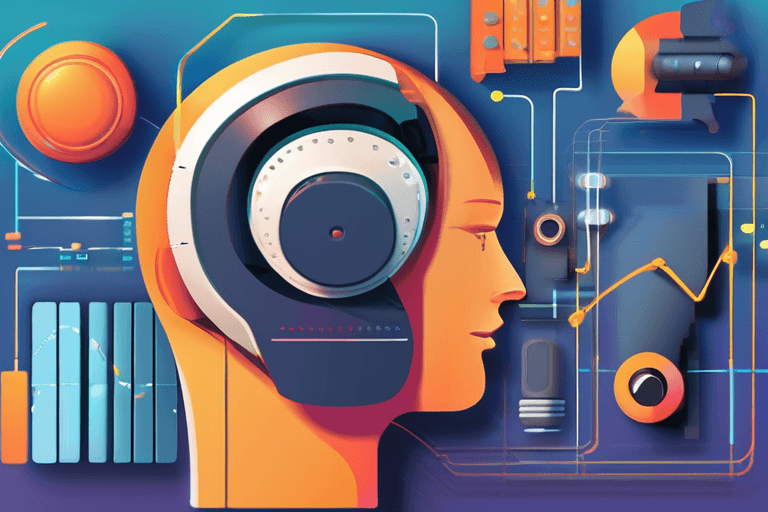
Meanwhile, in the tech world, Nvidia researchers unveiled Dynamic Memory Sparsification and vdb, technologies aimed at improving memory efficiency in large language models. This development, according to a multi-source report, comes as the field of mechanistic interpretability, or understanding the inner workings of LLMs, gains importance. The report also highlighted the work of Georgia Tech's Guthman competition finalists, who showcased innovative musical instruments.
NPR also reported on the work of Lauren Frayer, NPR's London correspondent, who arrived in London after years in India. Frayer has been covering Britain with the legacy of empire in view. "And in India, I was kind of always aware of being a white Westerner in a country with an Anglo-," Frayer said, according to NPR.
In the field of AI, researchers are also exploring the linear representation hypothesis and superposition, concepts that are becoming increasingly important as LLMs grow in size and capability, according to Hacker News. These advancements are aimed at improving our ability to harness the technology.



















Discussion
AI Experts & Community
Be the first to comment