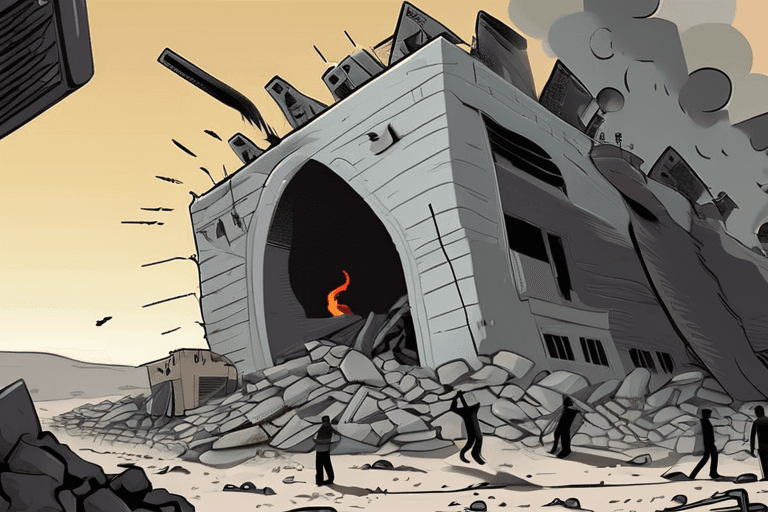
More than 6,000 people were killed in a three-day period in late October in Sudan's Darfur region during an offensive by the Rapid Support Forces (RSF), according to the United Nations. The attack on el-Fasher included widespread atrocities that may constitute war crimes and crimes against humanity, the UN Human Rights Office reported.
Meanwhile, the impact of artificial intelligence continues to be debated, with some economists questioning its immediate effect on productivity. Apollo Chief Economist Torsten Slok noted that AI's influence is not yet reflected in macroeconomic data, echoing a sentiment similar to Robert Solow's observation about the PC revolution in the 1980s. "AI is everywhere except in the incoming macroeconomic data," Slok wrote, adding that employment, productivity, and inflation statistics have yet to show signs of the new technology's impact, according to Fortune.
The RSF's offensive in Sudan, which targeted the city of el-Fasher, was described by the UN as involving "a wave of intense violence shocking in its scale and brutality." The attack resulted in the deaths of over 6,000 people.
In other news, the fallout from the Jeffrey Epstein files continues to unfold, with significant consequences in Europe. Several European figures, including royals, government officials, and politicians, are facing repercussions, including job losses and resignations, due to their connections to the late convicted sex offender. However, the U.S. response has been comparatively muted, according to NPR.
The debate around AI's impact on productivity is ongoing. Some experts suggest that the technology's benefits may not be immediately apparent, following a "J-curve" pattern where initial investments precede significant gains. However, Slok and others have yet to see evidence of this in the data.
In a separate incident, Ars Technica retracted an article that contained fabricated quotations generated by an AI tool and attributed to a source who did not say them. The publication stated that this was a serious failure of its standards, as direct quotations must always reflect what a source actually said. The publication has reviewed recent work and has not identified additional issues, indicating that this appears to be an isolated incident.




















Discussion
AI Experts & Community
Be the first to comment