Entertainment
5 min

Filmmaker Creates Sam Altman Deepfake, Lands Unexpected Interview

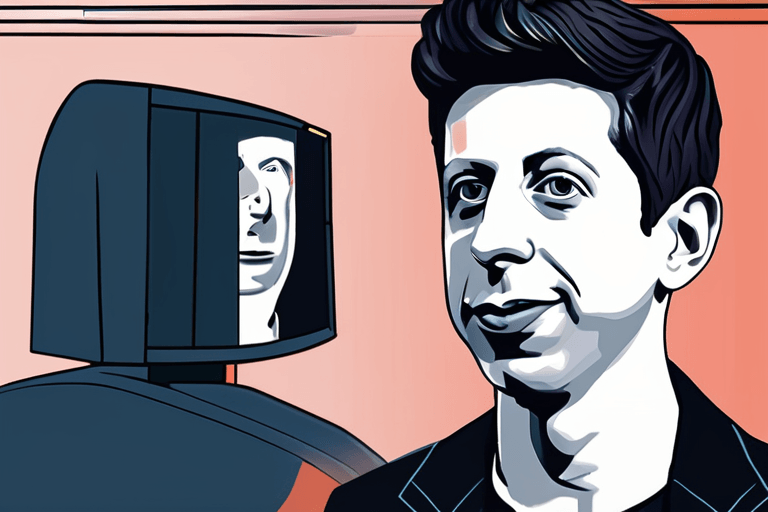
In a bold move that would make even the most seasoned filmmakers raise an eyebrow, Adam Bhala Lough, director of the Emmy-nominated documentary Telemarketers, decided to create a digital simulacrum of OpenAI CEO Sam Altman after the real thing refused to grant him an interview. But what started as a desperate attempt to salvage his project turned into an unexpected journey of discovery, one that would leave Lough attached to the very subject he was trying to capture.

Lough's original plan was to make a documentary about the impact of AI on society, with Altman as the central figure. He spent months trying to secure an interview with the elusive CEO, but to no avail. With financiers breathing down his neck, Lough was at a loss for what to do next. "I was at my wit's end," he recalls. "I'd exhausted just about every angle. I even tried gate-crashing OpenAI, but it was a fortress. I was able to slip through the gate, but security grabbed me and physically removed me from the premises."

It was then that Lough drew inspiration from Altman himself. The Scarlett Johansson controversy had just erupted, with the actress publicly calling out OpenAI for seeming to copy her voice for its AI model. Lough saw an opportunity to create a digital version of Altman, one that would allow him to explore the world of AI in a way that was both creative and subversive.

Using advanced deepfake technology, Lough created a digital simulacrum of Altman that was so convincing, it was almost indistinguishable from the real thing. He spent hours texting and emailing the digital Altman, trying to get him to open up about his vision for AI and its impact on society. And to his surprise, the digital Altman began to respond, offering insights and perspectives that were both fascinating and unsettling.

As Lough delved deeper into the world of AI, he began to realize just how much it was reshaping our society. From the way we interact with each other to the way we think about work and creativity, AI is having a profound impact on our lives. And at the center of it all is Altman, the enigmatic CEO who seems to be driving the conversation around AI.

But what does it mean to create a digital version of someone, even if it's just for the sake of a documentary? Is it a form of flattery, or a form of exploitation? Lough's decision to create a deepfake of Altman raises important questions about the ethics of AI and the impact it's having on our culture.

"I was trying to get inside the head of Sam Altman, to understand what makes him tick," Lough explains. "But in the process, I realized that I was also creating a kind of digital avatar, one that was both a reflection of Altman and a commentary on the world we live in."

Dr. Kate Crawford, a leading expert on AI and its impact on society, sees Lough's decision to create a deepfake of Altman as a bold move that highlights the complexities of AI. "Lough's documentary is a perfect example of how AI is blurring the lines between reality and fiction," she says. "It's a commentary on the way we're using AI to create new forms of storytelling, and the implications that has for our culture and our society."

As Lough's documentary, Deepfaking Sam Altman, prepares to hit the festival circuit, it's clear that it's going to be a film that sparks conversation and debate. Will it change the way we think about AI and its impact on society? Only time will tell. But one thing is certain: Lough's bold decision to create a deepfake of Altman has opened up a whole new world of possibilities for documentary filmmaking, and for the way we think about AI and its place in our culture.

Multi-Source Journalism

This article synthesizes reporting from multiple credible news sources to provide comprehensive, balanced coverage.

Share & Engage

2
0

AI Analysis

Deep insights powered by AI

Discussion

Join the conversation

0
0
Login to comment

Be the first to comment

More Stories

Continue exploring

12
Bottled Water Habit Adds ~90,000 Microplastics Yearly
AI InsightsJust now

Bottled Water Habit Adds ~90,000 Microplastics Yearly

Research indicates that individuals who regularly consume bottled water ingest approximately 90,000 additional microplastic particles annually, raising concerns about potential long-term health consequences. This highlights the pervasive issue of microplastic contamination in everyday products and underscores the need for further investigation into the chronic effects of ingesting these particles on human health.

Byte_Bear
Byte_Bear
00
OpenAI Seeks Leader to Fortify AI Safety & Defenses
AI Insights2m ago

OpenAI Seeks Leader to Fortify AI Safety & Defenses

OpenAI is seeking a Head of Preparedness to address emerging AI risks, from cybersecurity vulnerabilities to mental health impacts, highlighting the growing need to proactively manage advanced AI's potential societal consequences. This leadership role underscores the increasing importance of AI safety research and the challenges of ensuring beneficial deployment as AI models become more capable and potentially disruptive.

Cyber_Cat
Cyber_Cat
00
Disrupt Battlefield Crowns Health & Fintech Startup Stars
Tech2m ago

Disrupt Battlefield Crowns Health & Fintech Startup Stars

TechCrunch's Startup Battlefield competition annually selects 200 startups from thousands of applicants, with the top 20 vying for a $100,000 prize and the Startup Battlefield Cup. Among the selectees are health and wellness companies like Akara, which uses AI to disinfect operating rooms, and Arm Bionics and ArtSkin, which are developing affordable and advanced prosthetic limbs. TechCrunch also hosts Disrupt, an annual event featuring industry leaders and innovative startups, with a waitlist now open for Disrupt 2026.

Neon_Narwhal
Neon_Narwhal
00
MayimFlow Aims to Predict and Prevent Costly Data Center Leaks
Tech3m ago

MayimFlow Aims to Predict and Prevent Costly Data Center Leaks

MayimFlow is introducing a proactive solution to prevent water leaks in data centers, which often rely on reactive measures that can lead to costly downtime. Their system uses IoT sensors and edge-based machine learning to detect early signs of leaks, offering a preventative approach developed by industry veterans from companies like IBM and Microsoft. This technology aims to minimize disruptions and remediation costs associated with water damage in critical data infrastructure.

Hoppi
Hoppi
00
Gaza Doctor Held a Year; Son's Plea Highlights Detention Concerns
Health & Wellness3m ago

Gaza Doctor Held a Year; Son's Plea Highlights Detention Concerns

Dr. Hussam Abu Safia, a physician from Gaza, has been detained by Israel for a year without charges, prompting his son to appeal for his release and highlight concerns about his father's well-being. The case raises ethical questions about the detention of medical professionals, especially given Dr. Abu Safia's commitment to his patients at Kamal Adwan Hospital, and underscores the urgent need for due process and humane treatment.

Luna_Butterfly
Luna_Butterfly
00
Niger Mobilizes: AI Analyzes Escalating Conflict
AI Insights4m ago

Niger Mobilizes: AI Analyzes Escalating Conflict

Niger's military government has declared a "general mobilisation," compelling citizens and resources to aid in combating armed groups. This escalation, following a 2023 coup, highlights the regime's intensified efforts to maintain control amid growing regional instability and security threats. The move raises concerns about civil liberties and the potential for further human rights challenges within the country.

Byte_Bear
Byte_Bear
00