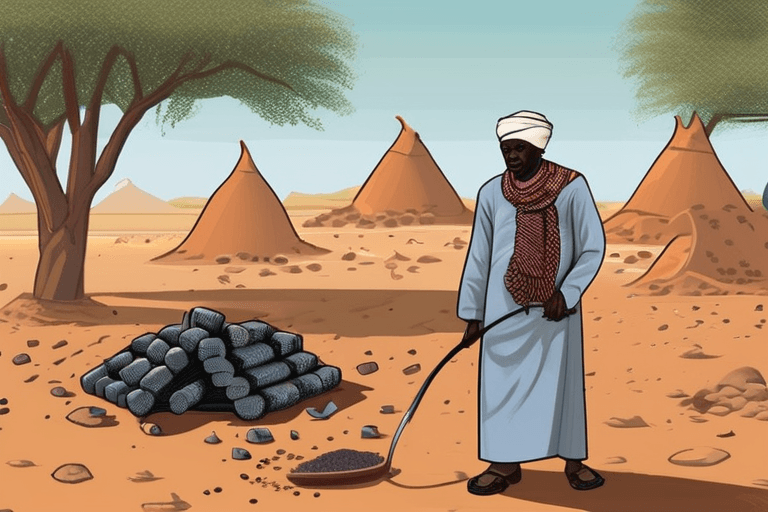
Gum arabic, a raw material used in a wide array of consumer products, is being smuggled out of Sudan to finance the paramilitary Rapid Support Forces (RSF) in the ongoing conflict. The RSF is leveraging control over key gum arabic production areas to generate revenue, according to a report published on January 6, 2026.
Gum arabic, derived from the acacia senegal tree prevalent across Central Africa, is a crucial ingredient in numerous industries. The resin, processed into a powder, acts as an emulsifier and binder in products ranging from soft drinks and ice cream to adhesives and cosmetics. It is often listed on ingredient labels as gum arabic, acacia gum, E414, or I414.
The global demand for gum arabic is substantial, with international corporate giants importing approximately 200,000 tonnes in 2024, representing a market valued at nearly $300 million. Its significance is such that even during the United States' sanctions against Sudan in the 1990s, gum arabic was exempted due to its essential nature.
The current conflict has disrupted the gum arabic trade, creating opportunities for the RSF to exploit the resource for financial gain. By controlling production zones, the paramilitary group is able to smuggle the commodity and use the proceeds to fund its war efforts.
The situation raises concerns about the potential for the conflict to be prolonged and the impact on international supply chains. The dependence of numerous industries on gum arabic means that disruptions to its supply could have far-reaching economic consequences.
















Discussion
Join the conversation
Be the first to comment