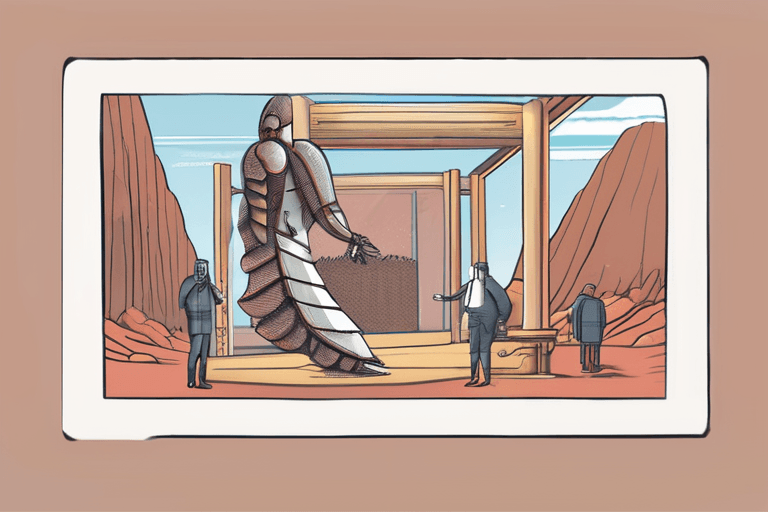
The lights dim, and a hush falls over the audience. Through the sleek lenses of your mixed reality glasses, the familiar faces around you shimmer with a digital aura. Then, he appears. Sir Ian McKellen, or rather, a hyper-realistic digital rendering of the legendary actor, strides confidently toward you. "Don't panic," he says, his voice resonating with warmth and authority, "Ian McKellen isn't really there."
This isn't theater as we know it. This is "An Ark," a groundbreaking play pushing the boundaries of performance and technology, premiering at the Shed on January 21st. Written by Simon Stephens, "An Ark" plunges audiences into a mixed reality experience, blurring the lines between the physical and digital worlds. The play features McKellen alongside Golda Rosheuvel, Arinze Kene, and Rosie Sheehy, all rendered as incredibly lifelike avatars, promising a deeply personal and immersive theatrical event.
Mixed reality (MR) is the key to this revolutionary experience. Unlike virtual reality (VR), which creates completely simulated environments, MR overlays digital content onto the real world. Think of it as augmented reality (AR) on steroids, offering a more seamless and interactive blend of the physical and virtual. In "An Ark," this means the actors, while not physically present, appear to interact directly with each audience member, creating the illusion of intimate, one-on-one performances. The technology allows the actors to "see" and respond to the audience in real-time, fostering a sense of connection previously unattainable in traditional theater.
The implications of this technology extend far beyond the stage. "An Ark" represents a significant leap forward in the entertainment industry, potentially revolutionizing how stories are told and experienced. Imagine attending a concert where your favorite band performs a personalized setlist just for you, or participating in a historical reenactment where you can interact with key figures from the past. The possibilities are endless.
Todd Eckert, the show's producer, emphasizes the unique connection "An Ark" fosters. "Feeling that connection between you as a member of the audience and the actors has never been possible before on a large scale," he explains. This sense of shared experience, of being seen and acknowledged by the performers, is what sets "An Ark" apart and hints at the transformative potential of mixed reality in the arts.
The technology powering "An Ark" is complex, involving sophisticated motion capture, real-time rendering, and advanced spatial audio. The mixed reality glasses, custom-designed for the production, are lightweight and comfortable, allowing audiences to fully immerse themselves in the experience without distraction. The software seamlessly integrates the digital actors into the physical space, ensuring that they appear to be standing right in front of you, reacting to your movements and expressions.
While "An Ark" is a theatrical production, its impact will likely resonate across various sectors. Education, training, and even remote collaboration could benefit from the immersive and interactive nature of mixed reality. Imagine medical students practicing complex surgeries in a realistic virtual environment, or engineers collaborating on a design project from different continents, interacting with a shared 3D model as if they were in the same room.
"An Ark" is more than just a play; it's a glimpse into the future of entertainment and human connection. It's a bold experiment that challenges our perceptions of reality and explores the potential of technology to enhance our lives. As audiences don their mixed reality glasses and step into the world of "An Ark," they are not just watching a performance; they are participating in a revolution. The question remains: are we ready to embrace this new reality?
















Discussion
Join the conversation
Be the first to comment