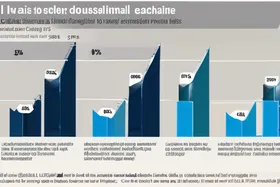
Venture capital firms and established tech companies significantly increased their investments in sodium-ion battery technology and generative coding platforms throughout 2025, signaling a major shift in the energy and software development sectors. Funding for sodium-ion battery startups jumped by 300% compared to the previous year, reaching an estimated $1.2 billion globally. Simultaneously, investments in generative coding companies saw a 250% increase, totaling approximately $900 million.
This surge in investment reflects growing confidence in the potential of these technologies to disrupt established markets. Sodium-ion batteries, utilizing readily available materials like sodium, offer a cost-effective and potentially safer alternative to lithium-ion batteries. Industry analysts predict that sodium-ion batteries could capture up to 20% of the energy storage market by 2030, particularly in grid-scale storage and affordable electric vehicles. Generative coding, powered by artificial intelligence, promises to automate significant portions of the software development lifecycle, potentially reducing development time and costs by as much as 40%.
The market impact of these technologies is expected to be substantial. The demand for cheaper and more sustainable energy storage solutions is driving the adoption of sodium-ion batteries. Major automotive manufacturers are already exploring integrating sodium-ion batteries into their entry-level EV models, aiming to reduce production costs and increase accessibility for consumers. In the software industry, generative coding tools are empowering developers to build complex applications faster and more efficiently, leading to increased productivity and innovation. Companies like Rubrik, a security and AI operations firm, are actively exploring how these technologies can secure and accelerate AI transformation.
The development of sodium-ion batteries has been ongoing for several years, but recent breakthroughs in materials science and manufacturing processes have made them commercially viable. Similarly, generative coding has evolved from a niche research area to a practical tool for software development, thanks to advancements in machine learning and natural language processing.
Looking ahead, both sodium-ion batteries and generative coding are poised for further growth and adoption. As manufacturing scales up and technology matures, costs are expected to decrease, making these solutions even more attractive to businesses and consumers. The continued investment and innovation in these areas suggest that they will play a significant role in shaping the future of energy and software development.

















Discussion
Join the conversation
Be the first to comment