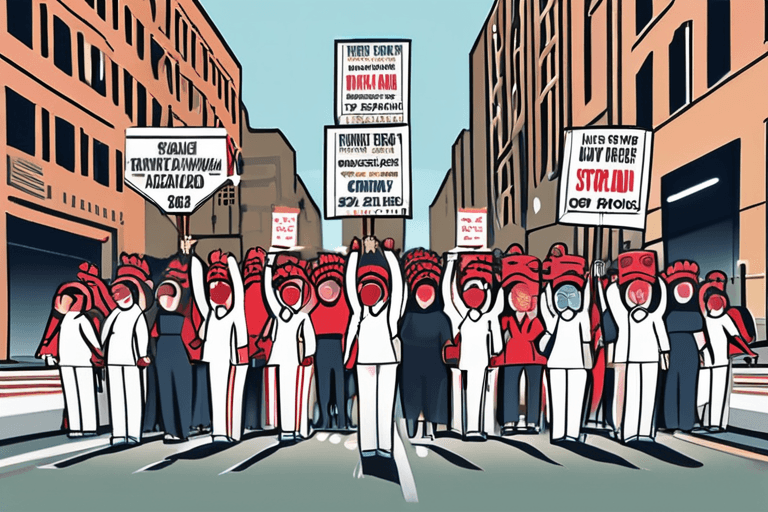
Nearly 15,000 nurses in New York City initiated a strike on Monday, demanding improved compensation, enhanced staffing ratios, and bolstered security protocols within hospital facilities. Mayor Zohran Mamdani voiced his support for the striking nurses and criticized the compensation packages of hospital executives during a visit to a nurses' picket line.
The strike, one of the largest healthcare labor actions in recent decades, highlights the growing tension between frontline medical staff and hospital management regarding resource allocation and employee well-being. Nurses argue that inadequate staffing levels compromise patient care and increase the risk of medical errors, citing studies published in the New England Journal of Medicine that correlate nurse-to-patient ratios with patient mortality rates. "We are stretched thin, constantly forced to make impossible choices about which patients get our immediate attention," said Sarah Miller, a registered nurse with 10 years of experience at one of the affected hospitals. "This isn't just about our paychecks; it's about the safety of our patients and the sustainability of our profession."
The nurses' union is advocating for a 20% pay increase over the next three years, arguing that current salaries fail to reflect the rising cost of living in New York City and the demanding nature of their work. They also seek enforceable staffing ratios that would mandate a specific number of nurses per patient, depending on the unit and patient acuity. Hospital administrators, however, contend that such demands are financially unsustainable, citing rising operational costs and declining reimbursement rates from insurance providers.
"We recognize the vital role our nurses play, and we are committed to reaching a fair agreement," stated a spokesperson for the Greater New York Hospital Association. "However, we must also ensure the long-term financial stability of our hospitals to continue providing quality care to the community."
The strike has led to disruptions in hospital services, with some facilities postponing elective surgeries and diverting ambulances to other hospitals. Experts in healthcare management warn that prolonged labor disputes can negatively impact patient outcomes and erode public trust in the healthcare system. "Strikes can create a climate of uncertainty and anxiety for patients, potentially leading to delays in treatment and increased stress levels," explained Dr. Emily Carter, a professor of health policy at Columbia University. "It's crucial for both sides to engage in good-faith negotiations to resolve this dispute as quickly as possible."
As of Tuesday, negotiations between the nurses' union and hospital management were ongoing, with both sides expressing a willingness to continue discussions. The city government is reportedly mediating the talks, hoping to broker a settlement that addresses the nurses' concerns while ensuring the financial viability of the hospitals. The impact of the strike on patient care and the broader healthcare landscape in New York City remains to be seen.



















Discussion
Join the conversation
Be the first to comment