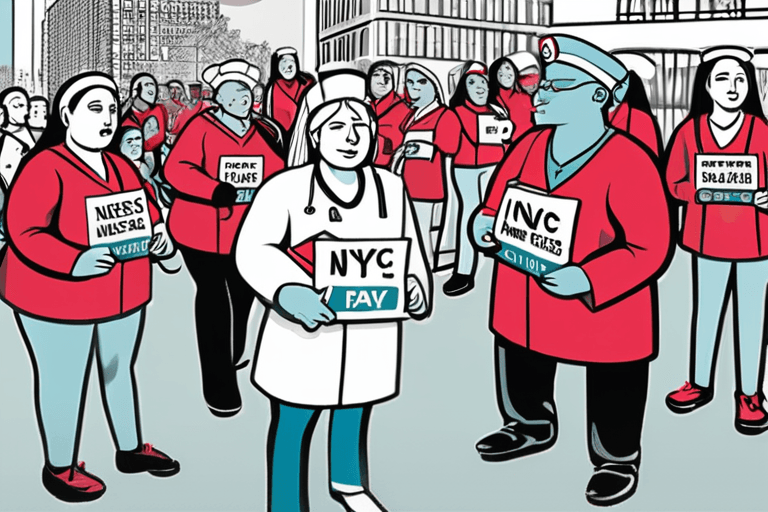
Nearly 15,000 nurses in New York City initiated a strike on Monday, citing demands for increased compensation, improved staffing ratios, and enhanced security protocols within hospital environments. The action, one of the largest healthcare strikes in recent decades, prompted a visit from Mayor Zohran Mamdani to a nurses' picket line.
The nurses, primarily from major hospital networks across the city, argue that current staffing levels compromise patient care and contribute to burnout among nursing staff. Studies published in the Journal of Nursing Scholarship have consistently demonstrated a correlation between nurse-to-patient ratios and patient outcomes, with higher ratios linked to increased rates of hospital-acquired infections, medication errors, and even mortality. "We are stretched thin, constantly forced to make impossible choices about which patients get our immediate attention," stated Sarah Miller, a registered nurse with 10 years of experience at a participating hospital, during an interview at the picket line. "This isn't just about our paychecks; it's about the safety and well-being of our patients."
Mayor Mamdani voiced support for the striking nurses, criticizing hospital administrators for what he characterized as disproportionate executive compensation packages. "It is unconscionable that hospital CEOs are making millions while nurses are struggling to provide adequate care due to understaffing and inadequate resources," Mamdani stated in a press conference held near the strike location. He further added that his administration is exploring options to mediate negotiations between the nurses' union and hospital management.
The strike raises concerns about potential disruptions to healthcare services across the city. Emergency rooms are expected to experience increased wait times, and some elective procedures may be postponed. Dr. Emily Carter, a healthcare policy expert at Columbia University's Mailman School of Public Health, noted that prolonged strikes can have significant public health consequences. "While the nurses' concerns are valid, it's crucial to find a resolution quickly to minimize the impact on patient access to care," Carter explained. She suggested that independent arbitration could provide a pathway to a fair and equitable agreement.
As of Tuesday, negotiations between the nurses' union and hospital representatives remain stalled. Both sides have expressed a willingness to return to the bargaining table, but significant disagreements persist regarding wage increases and staffing level commitments. The strike is ongoing, and its duration remains uncertain. City officials are urging both parties to prioritize patient welfare and reach a resolution as soon as possible.


















Discussion
Join the conversation
Be the first to comment