NASA launched the Pandora mission early Sunday from Vandenberg Space Force Base in California, aiming to maximize the scientific output of the James Webb Space Telescope. The Pandora satellite, one of approximately 40 small payloads, rode into a polar Sun-synchronous orbit aboard a SpaceX Falcon 9 rocket.
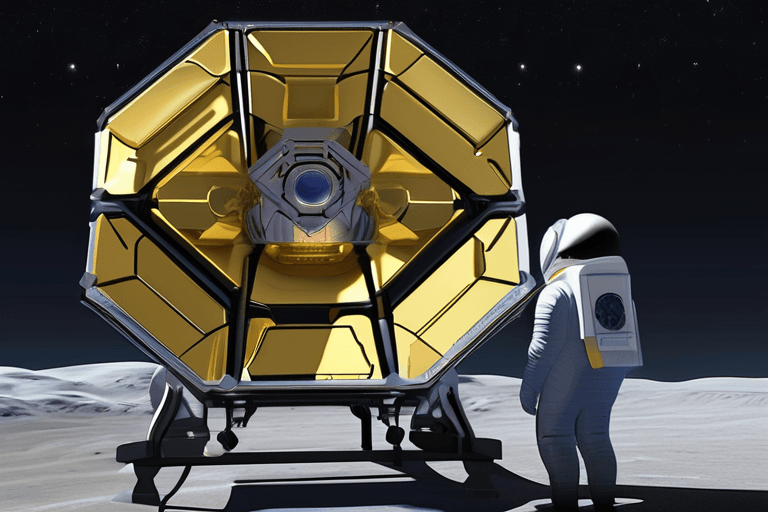
The mission is designed to enhance the Webb telescope's ability to identify habitable worlds around distant stars. Launched in 2021 at a cost exceeding $10 billion, the Webb telescope possesses the capability to analyze distant planetary systems and detect chemical signatures indicative of potential life, such as water vapor, carbon dioxide, and methane. Its location, a million miles from Earth, allows its large, gold-coated mirror to gather more light than any other space-based telescope.
Astronomers seek to leverage the full potential of the Webb observatory, which is also capable of observing the oldest galaxies in the Universe and studying planets, moons, and smaller objects within our own Solar System. The Pandora mission will contribute to these efforts.



















Discussion
Join the conversation
Be the first to comment