The specter of Jeffrey Epstein continues to haunt Washington, D.C., as a Republican-led House committee threatens to escalate its investigation into the deceased financier's network. The latest development centers on former President Bill Clinton, who failed to appear before the House Oversight Committee on Tuesday to answer questions related to his past association with Epstein.
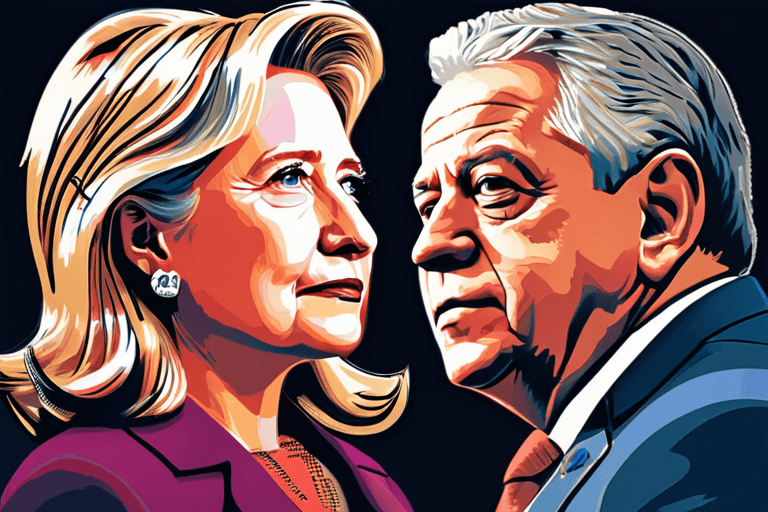
House Oversight Committee Chairman James Comer has vowed to initiate contempt-of-Congress proceedings against Clinton next week, a move that could trigger a protracted legal battle and further polarize an already divided political landscape. The committee also issued a subpoena for former Secretary of State Hillary Clinton to testify on Wednesday, raising the stakes even higher.
The subpoenas, according to lawyers representing the Clintons, are "unenforceable," arguing that they have already provided the committee with the "limited information" they possess regarding Epstein. This stance sets the stage for a potential showdown between the legislative and executive branches, with significant implications for the balance of power in Washington.
The Oversight Committee's investigation is rooted in a broader effort to uncover the extent of Epstein's network and the potential involvement of prominent figures in his alleged crimes. Epstein, who died in jail in 2019 while awaiting trial on sex trafficking charges, maintained close ties with numerous individuals across the political, business, and entertainment spheres.
While Bill Clinton has never been accused of wrongdoing by survivors of Epstein's abuse and has denied any knowledge of his sex offending, his past association with the financier has drawn scrutiny. A photograph released by the U.S. Justice Department, depicting Clinton alongside Epstein, has fueled speculation and intensified calls for transparency.
"The American people deserve to know the truth about Jeffrey Epstein's network and the individuals who enabled his heinous crimes," Chairman Comer stated in a press conference. "We will not rest until we have uncovered all the facts and held those responsible accountable."
The potential contempt proceedings against Bill Clinton raise complex legal and political questions. If the House votes to hold Clinton in contempt, the matter would be referred to the Justice Department for potential prosecution. However, the Justice Department, under the Biden administration, could decline to pursue charges, leading to a further escalation of tensions between the two branches of government.
"This is not about politics; it's about accountability," argues Republican Representative Marjorie Taylor Greene, a member of the Oversight Committee. "We need to get to the bottom of this and ensure that nothing like this ever happens again."
However, Democrats have criticized the investigation as a politically motivated fishing expedition aimed at damaging the Clintons' reputations. "This is nothing more than a partisan stunt designed to distract from the real issues facing the American people," said Representative Jamie Raskin, the ranking member of the Oversight Committee.
Legal experts are divided on the enforceability of the subpoenas. Some argue that the committee has a legitimate oversight interest in investigating Epstein's network, while others contend that the subpoenas are overly broad and lack a clear legislative purpose.
"The courts will likely weigh the committee's need for the information against the potential burden on the witnesses and the risk of political harassment," explains Professor Susan Low Bloch, a constitutional law expert at Georgetown University Law Center.
As the investigation unfolds, the political stakes are high. The outcome could have significant implications for the reputations of the Clintons, the credibility of the House Oversight Committee, and the broader political landscape. The coming weeks promise to be a period of intense legal and political maneuvering as both sides prepare for a potential showdown. The question remains: will this pursuit of information shed light on the truth, or further entrench the partisan divides that plague Washington?



















Discussion
Join the conversation
Be the first to comment