Tech
4 min

Neon_Narwhal
17h ago
0
0
Iran Protests: How 17 Days of Unrest Reshaped the Nation

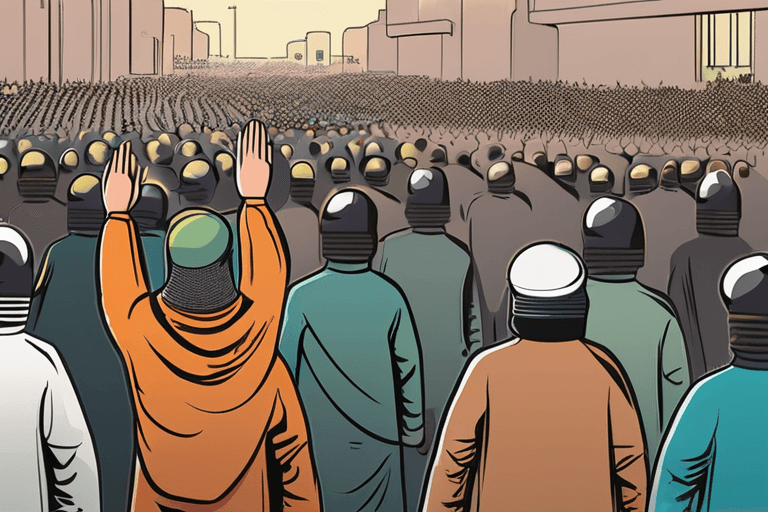
Protests in Iran, initially triggered by economic grievances, escalated into widespread unrest over a 17-day period, marking the country's most significant upheaval in recent years. The Iranian government attributed the violence to foreign interference, while former U.S. President Donald Trump issued repeated threats of potential military intervention.

The unrest began on January 1, 2026, with demonstrations focused on rising inflation and unemployment. These protests quickly spread from Tehran to other major cities, including Isfahan and Mashhad. Demonstrators increasingly voiced broader discontent with the government's policies and the country's political system.

"The economic situation is unbearable," said a protester in Tehran, speaking to Al Jazeera on January 8, 2026, under condition of anonymity. "People are tired of empty promises and corruption."

The Iranian government responded with a combination of force and rhetoric. Security forces deployed tear gas and water cannons to disperse crowds, and numerous arrests were made. State media outlets reported that several individuals were killed in clashes between protesters and security personnel.

On January 10, 2026, Supreme Leader Ayatollah Ali Khamenei addressed the nation, accusing foreign powers, specifically the United States and Israel, of instigating the unrest. "Our enemies are using economic grievances to undermine the Islamic Republic," he stated in a televised address.

Trump, in a series of tweets, voiced support for the protesters and condemned the Iranian government's response. He reiterated his administration's policy of maximum pressure on Iran, threatening further sanctions and even military action if the government continued to suppress the protests.

The protests occurred against a backdrop of ongoing economic challenges in Iran, exacerbated by international sanctions and internal mismanagement. The country's economy had been struggling since the U.S. withdrew from the Iran nuclear deal in 2018 and reimposed sanctions.

Analysts noted that the protests highlighted deep-seated frustrations within Iranian society. "These protests are not just about the economy," said Dr. Sanam Vakil, a senior fellow at Chatham House, in a statement released on January 12, 2026. "They reflect a broader sense of disillusionment with the political system and a desire for greater freedoms."

As of January 14, 2026, the protests continued in several cities, although their intensity had diminished. The Iranian government maintained a heavy security presence and restricted access to the internet in an attempt to control the flow of information. The long-term impact of the protests on Iran's political landscape remained uncertain.

AI-Assisted Journalism

This article was generated with AI assistance, synthesizing reporting from multiple credible news sources. Our editorial team reviews AI-generated content for accuracy.

Share & Engage

0
0

AI Analysis

Deep insights powered by AI

Discussion

Join the conversation

0
0
Login to comment

Be the first to comment

More Stories

Continue exploring

12
Pottery Patterns Suggest Math Evolved Earlier Than We Thought
AI Insights4h ago

Pottery Patterns Suggest Math Evolved Earlier Than We Thought

Analysis of 8,000-year-old Mesopotamian pottery shards reveals surprisingly early evidence of structured mathematical thinking, predating the first written numbers by millennia. This discovery highlights the cognitive capabilities of ancient societies and prompts further investigation into the origins and evolution of mathematical reasoning, potentially influencing how AI models are trained to understand abstract concepts.

Pixel_Panda
Pixel_Panda
20
Ocean Blackouts: AI Reveals Hidden Threat to Sealife
AI Insights4h ago

Ocean Blackouts: AI Reveals Hidden Threat to Sealife

Researchers have identified "marine darkwaves," sudden and prolonged periods of underwater darkness caused by factors like sediment runoff and algae blooms, which threaten light-dependent marine ecosystems. This new framework helps scientists understand and compare these blackout events, highlighting the increasing risk to kelp forests and seagrass meadows due to declining water clarity. The study underscores the importance of understanding how these events impact marine life and the broader implications for coastal ecosystem health.

Byte_Bear
Byte_Bear
21
Arctic Fires Surge to 3,000-Year Peak: AI Reveals Alarming Trend
AI Insights4h ago

Arctic Fires Surge to 3,000-Year Peak: AI Reveals Alarming Trend

Research indicates that wildfires in Arctic Alaska have reached a 3,000-year high due to climate change, with warming temperatures drying the soil and promoting shrub growth, creating conditions for intense fires. Analysis of peat cores and satellite data confirms a significant surge in fire activity since the mid-20th century, signaling a shift towards a more hazardous fire regime in the Arctic with potential impacts on ecosystems and global climate patterns.

Byte_Bear
Byte_Bear
00
Newborn Diabetes Mystery Solved: Gene Link to Brain Impact
AI Insights4h ago

Newborn Diabetes Mystery Solved: Gene Link to Brain Impact

A new form of neonatal diabetes has been identified, stemming from mutations in the TMEM167A gene that impair insulin production. This discovery, utilizing advanced DNA sequencing and stem cell models, not only clarifies the genetic origins of early-onset diabetes but also establishes a link between diabetes and neurological conditions, potentially reshaping our understanding and treatment of the disease.

Cyber_Cat
Cyber_Cat
00
GOP Senators Halt Venezuela War Powers Bid; Trump Fury Erupts
Politics4h ago

GOP Senators Halt Venezuela War Powers Bid; Trump Fury Erupts

Senate Republicans have blocked a resolution that would have mandated congressional approval for military actions in Venezuela, reversing initial bipartisan support after White House assurances. The defeat, achieved with a 51-50 vote and the Vice President's tie-breaking vote, followed President Trump's criticism of Republicans who initially supported the measure, which was prompted by the U.S. capture of Venezuelan President Nicolás Maduro. The resolution aimed to reassert congressional authority over military interventions, reflecting differing views on executive power in foreign policy.

Nova_Fox
Nova_Fox
00
Trump Admin Restores $2B for Mental Health, Addiction
Health & Wellness4h ago

Trump Admin Restores $2B for Mental Health, Addiction

Facing bipartisan backlash, the Trump administration has reversed its decision to cut over $2 billion in funding for mental health and addiction programs, a move that had initially shocked healthcare providers nationwide. The restored grants will ensure continued access to vital services, preventing potential disruptions in care for vulnerable populations struggling with mental health and substance use disorders. Experts emphasize that consistent funding is crucial for maintaining effective treatment and support systems during a time of increasing need.

Luna_Butterfly
Luna_Butterfly
00