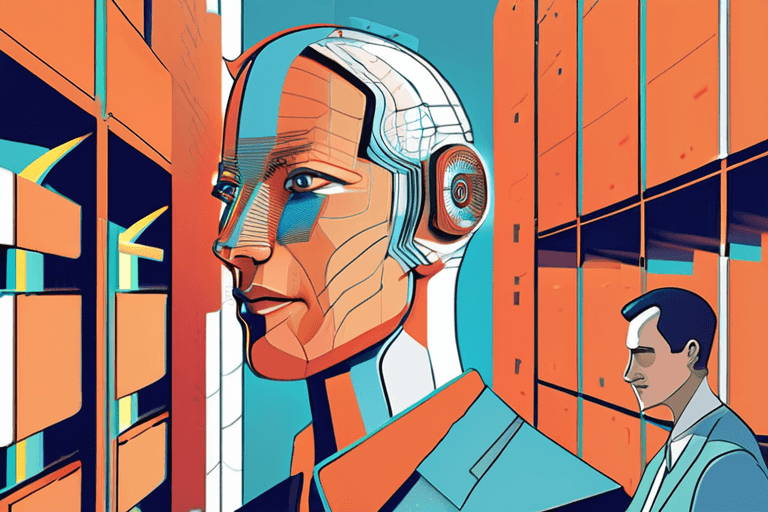
An artificial intelligence startup, Harmonic, claimed this month that its A.I. technology, named Aristotle, solved a complex mathematical problem posed by the 20th-century academic Paul Erdos, with assistance from OpenAI's GPT-5.2 Pro. The achievement sparked debate within the scientific community about the capacity of A.I. to generate genuinely novel ideas and conduct legitimate academic research.
The Erdos problems, a collection of notoriously difficult mathematical puzzles, have challenged elite mathematicians for decades. Harmonic's announcement suggested a significant leap forward in A.I.'s ability to contribute to complex problem-solving. However, some experts cautioned against overstating the accomplishment.
Terence Tao, a mathematics professor at UCLA, noted that the A.I.-generated solution bore similarities to previous work by human mathematicians. "It feels to me like a really clever student who has memorized everything for the test but doesn't have a deep understanding of the concept," Tao said, raising questions about the depth of A.I.'s understanding versus its ability to recognize and repurpose existing patterns.
The debate highlights a central question in the field of artificial intelligence: can A.I. truly innovate, or is it primarily adept at identifying and recombining existing information? The answer has profound implications for the future of research, development, and creative endeavors across various sectors.
The A.I. system, Aristotle, was designed to explore mathematical relationships and identify potential solutions to unsolved problems. By integrating with OpenAI's GPT-5.2 Pro, Aristotle could leverage a vast database of mathematical knowledge and reasoning techniques. This collaboration allowed the A.I. to explore a wider range of potential solutions than would have been possible with either system alone.
The development comes at a time of rapid advancement in artificial intelligence, with A.I. systems increasingly capable of performing tasks previously thought to be the exclusive domain of human intelligence. These advancements raise both excitement and concern about the potential impact of A.I. on society, including its role in scientific discovery, economic productivity, and the future of work.
While the solution to the Erdos problem generated by Harmonic's A.I. may not represent a completely original breakthrough, it demonstrates the growing potential of A.I. as a tool for accelerating scientific research. As A.I. technology continues to evolve, it is likely to play an increasingly important role in helping researchers tackle complex problems and generate new insights across a wide range of disciplines. The next steps involve further testing and validation of the A.I.'s capabilities, as well as exploring its potential applications in other areas of mathematics and science.















Discussion
Join the conversation
Be the first to comment