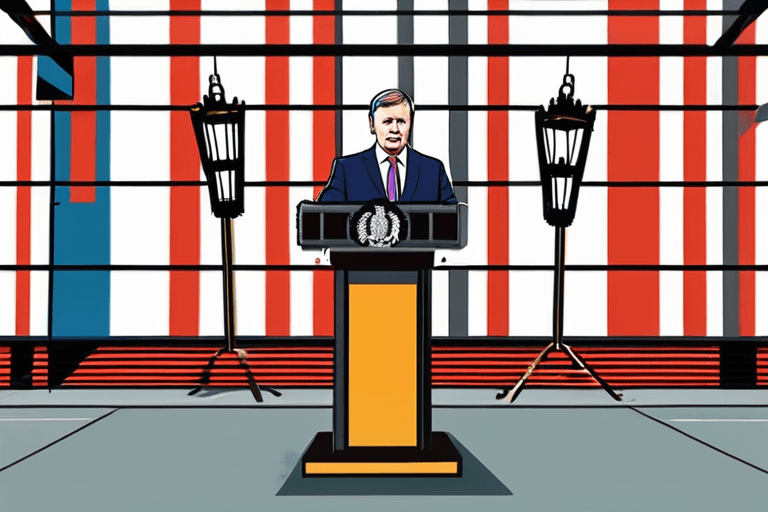
No. 10 Downing Street has expressed approval of reports indicating that X, formerly known as Twitter, is taking steps to address the issue of deepfakes generated by Grok, its artificial intelligence model. The move comes amid growing concerns about the potential for misuse of AI-generated content to spread misinformation and propaganda.
A spokesperson for the Prime Minister stated that the government welcomes any efforts to mitigate the risks associated with advanced AI technologies. "We have been clear about the need for responsible innovation in AI, and we are encouraged to see companies taking proactive steps to address potential harms," the spokesperson said.
Deepfakes, a portmanteau of "deep learning" and "fake," are synthetic media in which a person in an existing image or video is replaced with someone else's likeness. Grok, X's AI model, is capable of generating realistic images and videos, raising concerns that it could be used to create convincing but false depictions of individuals or events. The technology relies on generative adversarial networks (GANs), a type of machine learning architecture where two neural networks compete against each other – one generating fake content and the other trying to distinguish it from real content – until the generated content becomes highly realistic.
X has not yet released specific details about the measures it is implementing to combat Grok-generated deepfakes. However, industry analysts speculate that the company may be exploring techniques such as watermarking AI-generated content, developing algorithms to detect deepfakes, and implementing stricter content moderation policies. Watermarking involves embedding a subtle, often invisible, marker into the generated content that identifies it as AI-generated. Detection algorithms analyze images and videos for telltale signs of manipulation, such as inconsistencies in lighting, unnatural facial movements, or artifacts introduced by the GAN process.
The rise of deepfakes has prompted widespread concern across various sectors, including politics, media, and entertainment. Experts warn that deepfakes could be used to manipulate public opinion, damage reputations, and even incite violence. The potential for misuse is particularly acute in the context of elections, where deepfakes could be used to spread false information about candidates or influence voter turnout.
The UK government has been actively considering regulatory frameworks for AI, including measures to address the risks associated with deepfakes. The Online Safety Act, which recently came into effect, includes provisions to tackle harmful online content, including deepfakes. The government is also working with international partners to develop global standards for AI governance.
It remains to be seen what specific actions X will take to address Grok deepfakes and how effective those measures will be. The company is expected to release further details in the coming weeks. The effectiveness of any solution will likely depend on the sophistication of the detection methods and the speed with which X can respond to emerging threats. The ongoing development and deployment of AI technologies requires constant vigilance and adaptation to stay ahead of potential misuse.













Discussion
Join the conversation
Be the first to comment