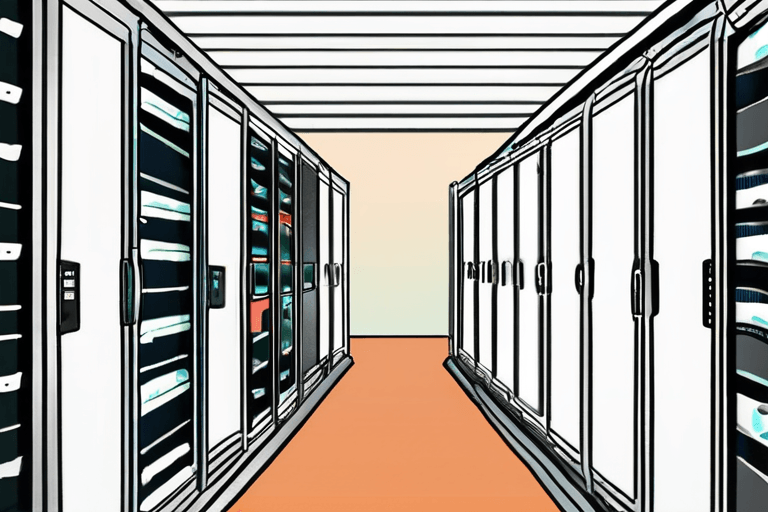
The future of data centres may be smaller, as advancements in on-device AI processing threaten the dominance of large, centralized facilities. Perplexity CEO Aravind Srinivas recently suggested that powerful, personalized AI tools running directly on user devices could eventually render massive data centres obsolete.
This shift could dramatically alter the landscape of the data centre market, currently valued in the hundreds of billions of dollars globally. While specific figures on the potential decline are speculative, the trend towards edge computing and on-device processing represents a significant challenge to the traditional model. If a substantial portion of AI processing migrates to individual devices, demand for data centre capacity could plateau or even decrease, impacting revenue streams for major players in the data centre industry.
The market is already seeing initial moves in this direction. Apple's new Apple Intelligence system incorporates on-device processing on specialized chips within its latest products, promising faster performance and enhanced data security. Microsoft's Copilot laptops also feature on-device AI capabilities. However, these features are currently limited to premium devices, highlighting a key barrier: the processing power required for AI remains beyond the capabilities of most standard equipment.
The current data centre paradigm relies on transmitting data to and from these facilities for processing, a model that consumes significant energy and bandwidth. Companies like Apple and Microsoft are betting that advancements in chip technology will enable more AI tasks to be performed locally, reducing reliance on remote servers. This shift could also address growing concerns about data privacy and security, as sensitive information would not need to be transmitted to external data centres.
Looking ahead, the "if and when" of this transition hinges on continued advancements in chip technology and the development of more efficient AI algorithms. If these trends continue, the industry could see a gradual shift towards a more distributed model, with data centres playing a more specialized role in handling complex tasks that cannot be performed on individual devices. While the complete obsolescence of data centres remains a distant prospect, the rise of on-device AI processing represents a significant long-term challenge to the status quo.















Discussion
Join the conversation
Be the first to comment