Ever find yourself staring at a mountain of laundry, only to be inexplicably drawn to the siren song of your phone? You're not alone. Procrastination, that universal human experience, might finally have a neurological explanation, and it's all thanks to a clever experiment involving monkeys and a fascinating brain circuit.
For years, psychologists have explored the behavioral and emotional roots of procrastination, citing factors like fear of failure, perfectionism, and poor time management. But what if the answer lies deeper, wired into the very architecture of our brains? Recent research from Kyoto University suggests just that, identifying a neural pathway that appears to be responsible for our tendency to delay tasks associated with unpleasantness, even when a reward is on the horizon.
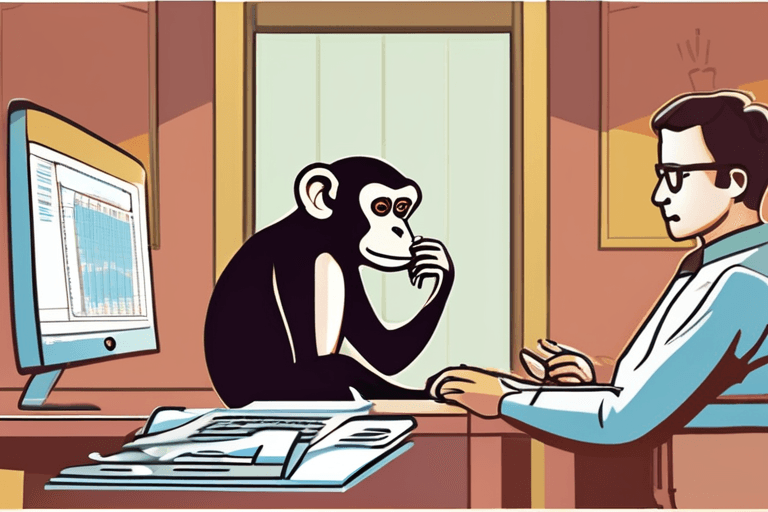
The study, spearheaded by neuroscientist Ken-ichi Amemori, delved into the brain mechanisms that dampen our motivation when faced with tasks involving stress, punishment, or discomfort. To unravel this complex process, Amemori and his team turned to macaques, primates whose brains share significant similarities with our own, making them valuable models for understanding decision-making and motivation.
The researchers trained two macaques to perform a series of decision-making tasks. In one phase, the monkeys, after a period of controlled water intake, were presented with two levers. Activating each lever resulted in a water reward, but one lever offered a smaller amount while the other provided a larger, more desirable quantity. This initial exercise allowed the scientists to gauge how the value of the reward influenced the monkeys' willingness to work.
The real breakthrough came when the researchers introduced a negative element. In subsequent trials, performing one of the tasks was associated with a mild, aversive stimulus. The scientists meticulously tracked the monkeys' brain activity during these trials, focusing on specific neural circuits known to be involved in motivation and reward processing.
What they discovered was a distinct neural connection that seemed to act as a "brake" on motivation when faced with the prospect of an unpleasant task. This circuit, connecting specific regions of the brain involved in evaluating reward and aversion, appeared to be responsible for weighing the potential benefits against the perceived costs, ultimately influencing the decision to act – or, more accurately, to delay action.
"This study provides compelling evidence for a specific neural mechanism underlying procrastination," explains Dr. Anya Sharma, a cognitive neuroscientist at Stanford University, who was not involved in the research. "It highlights the intricate interplay between reward and aversion in shaping our behavior, and offers a potential target for interventions aimed at overcoming procrastination."
The implications of this research extend far beyond understanding why we put off doing the dishes. By pinpointing the specific brain circuits involved in procrastination, scientists may be able to develop targeted therapies or interventions to help individuals struggling with chronic procrastination, which can have significant consequences on academic performance, work productivity, and overall well-being.
Imagine a future where personalized brain stimulation techniques could gently nudge this neural circuit, rebalancing the scales and making it easier to tackle those dreaded tasks. Or perhaps, a deeper understanding of this mechanism could lead to the development of cognitive training exercises designed to strengthen our ability to override the urge to procrastinate.
While the research is still in its early stages, it offers a tantalizing glimpse into the complex neural processes that govern our behavior. As AI and neurotechnology continue to advance, we may soon have the tools to not only understand why we procrastinate, but also to finally conquer it, one task at a time. The future of productivity, it seems, may lie within the intricate wiring of our own brains.















Discussion
Join the conversation
Be the first to comment