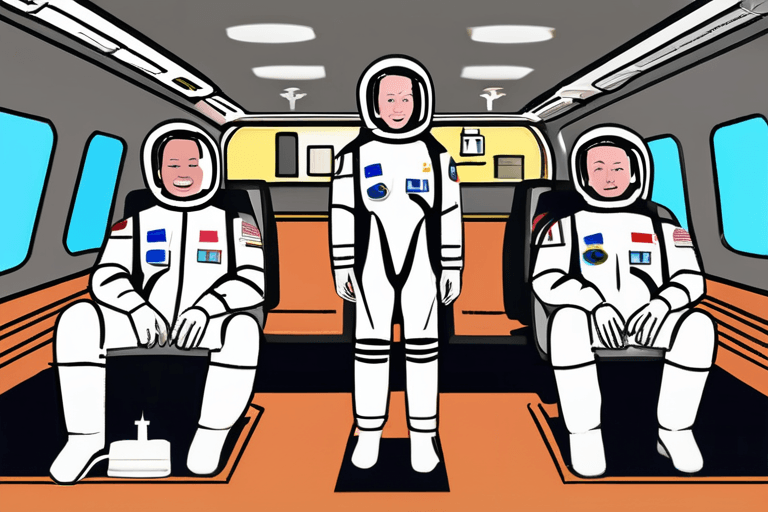
Four NASA astronauts from Crew-11 splashed down safely in the Pacific Ocean near San Diego at 3:41 a.m. EST Thursday, concluding a mission to the International Space Station (ISS) that was cut short by approximately one month due to a medical situation. The return marked the first medical evacuation in the history of the ISS and the first time in over a quarter-century of continuous human presence in space that a medical issue necessitated the early termination of a mission.
The SpaceX Dragon capsule undocked from the ISS at 5:20 p.m. EST Wednesday, while the station and capsule were positioned 260 miles south of Australia, initiating the nearly 10-hour journey back to Earth. NASA officials have not disclosed the specific nature of the medical issue, citing privacy concerns for the affected astronaut. However, they emphasized that the decision to bring the crew home early was made out of an abundance of caution and in consultation with flight surgeons and medical experts.
"The health and safety of our astronauts is always our top priority," said Dr. Ellen Ochoa, former astronaut and current director of the Johnson Space Center, in a press briefing following the splashdown. "While we cannot provide specific details about the medical condition, we want to assure the public that the astronaut is receiving the best possible care."
The early return raises questions about the challenges of providing medical care in space and the protocols in place for handling emergencies. Dr. Sanjay Gupta, CNN's chief medical correspondent, noted that "space travel presents unique physiological challenges, including changes in immune function, bone density, and cardiovascular health. A medical issue that might be manageable on Earth could become much more serious in the space environment."
NASA has a comprehensive medical support system for astronauts, including onboard medical kits, remote consultations with flight surgeons, and the capability to perform certain medical procedures in space. However, the agency acknowledges that there are limitations to what can be done in orbit.
"We are constantly working to improve our medical capabilities for long-duration space missions," stated Dr. Ochoa. "This incident will provide valuable data and insights that will help us refine our protocols and develop new technologies to address medical challenges in space."
The returning astronauts will undergo thorough medical evaluations at the Johnson Space Center in Houston. NASA is expected to release more information about the medical situation and its implications for future missions after these evaluations are complete. The remaining crew members on the ISS will continue their research and operations, with a new crew scheduled to launch in the coming months.
















Discussion
Join the conversation
Be the first to comment