Ever find yourself staring at a mountain of laundry, only to be inexplicably drawn to the siren song of your phone? You're not alone. Procrastination, that universal human experience, might finally have a neurological explanation, thanks to a fascinating study that peers into the inner workings of the brain.
For years, psychologists have explored the behavioral and emotional roots of procrastination, citing factors like fear of failure, perfectionism, and difficulty with self-regulation. But what if the answer lies deeper, in the very circuits that govern our motivation? Recent research from Kyoto University suggests just that, identifying a specific neural connection that seems to be responsible for our tendency to delay tasks associated with unpleasantness, even when those tasks promise a reward.
The study, led by neuroscientist Ken-ichi Amemori, focused on understanding the brain mechanisms that dampen our enthusiasm for activities linked to stress, punishment, or discomfort. To unravel this mystery, Amemori and his team turned to macaques, a common model in neuroscience research due to their cognitive similarities to humans. The researchers trained two macaques to perform decision-making tasks. In one experiment, the monkeys were presented with two levers. Activating each lever resulted in a water reward, but one lever offered a smaller amount while the other offered a larger one. This setup allowed the scientists to observe how the value of the reward influenced the monkeys' willingness to engage with the task.
The key finding centered on a specific neural pathway connecting two brain regions: the amygdala, known for processing emotions like fear and anxiety, and the dorsal striatum, a region involved in action selection and motivation. The researchers discovered that when a task was associated with an unpleasant experience, activity in this amygdala-striatum pathway increased, effectively signaling the brain to avoid the task, even if it meant missing out on a reward.
This research offers a compelling glimpse into the biological underpinnings of procrastination. It suggests that our brains are wired to avoid unpleasantness, and this wiring can override our rational desire to complete tasks that ultimately benefit us. But what are the broader implications of this discovery? Could this understanding lead to new strategies for overcoming procrastination?
"This study provides a valuable framework for understanding how the brain weighs costs and benefits when making decisions," explains Dr. Anya Sharma, a cognitive neuroscientist at Stanford University, who was not involved in the research. "It highlights the crucial role of the amygdala in shaping our motivation and suggests that targeting this brain region could potentially help individuals overcome procrastination."
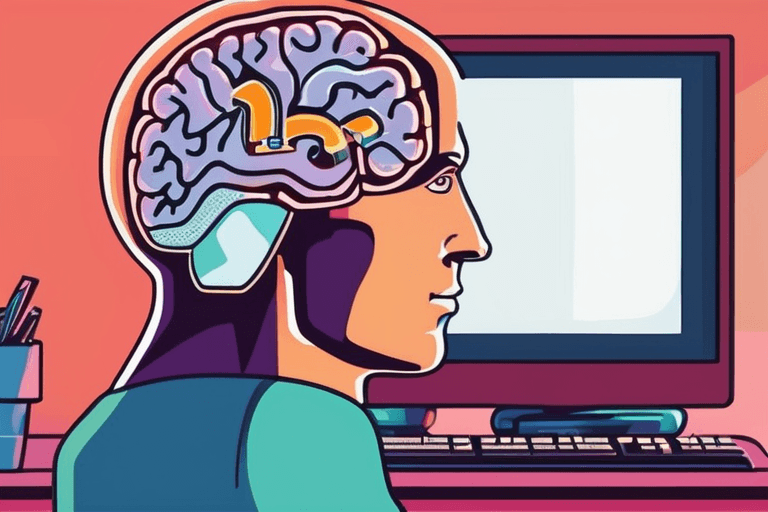
The findings also raise intriguing questions about the role of artificial intelligence in addressing procrastination. Imagine a future where AI-powered tools could monitor brain activity and provide personalized interventions to help individuals overcome their tendency to delay tasks. For example, a wearable device could detect increased activity in the amygdala-striatum pathway and offer real-time prompts to break down the task into smaller, more manageable steps, or even provide positive reinforcement to counteract the negative associations.
However, the ethical considerations of such technology are significant. Concerns about privacy, data security, and the potential for manipulation would need to be carefully addressed. Furthermore, it's crucial to remember that procrastination is a complex phenomenon with multiple contributing factors. While understanding the neural mechanisms involved is valuable, it's not a silver bullet.
Looking ahead, future research could explore how individual differences in brain structure and function influence susceptibility to procrastination. Studies could also investigate the effectiveness of various interventions, such as mindfulness training and cognitive behavioral therapy, in modulating activity in the amygdala-striatum pathway.
Ultimately, understanding the brain mechanisms that drive procrastination is a crucial step towards developing more effective strategies for overcoming this common human challenge. While the allure of social media might continue to tempt us, this research offers a glimmer of hope that we can learn to rewire our brains and conquer the tasks we tend to avoid.















Discussion
Join the conversation
Be the first to comment