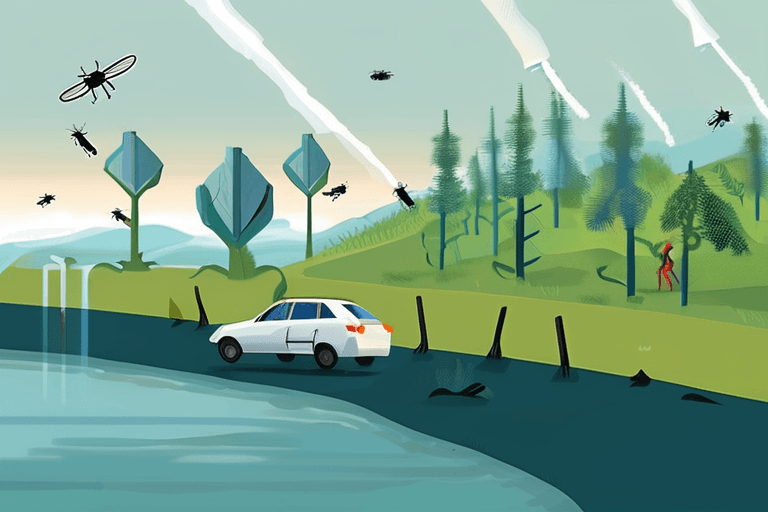
In the rapidly disappearing Atlantic Forest of Brazil, mosquitoes are increasingly adapting to human-dominated landscapes, with many species now preferring to feed on people rather than the forest's diverse wildlife, according to a study published in Frontiers. This shift in feeding behavior dramatically raises the risk of spreading dangerous viruses such as dengue and Zika, potentially making forest-edge communities more vulnerable to outbreaks.
The research highlights how deforestation can quietly reshape disease dynamics, as the shrinking Atlantic Forest forces mosquitoes to seek alternative blood sources. Scientists found a significant correlation between forest loss and the increased preference of certain mosquito species for human blood. This adaptation is a direct consequence of habitat destruction, pushing mosquitoes closer to human populations and altering their feeding habits.
The Atlantic Forest, once a vast ecosystem running along Brazil's coastline, has been reduced to roughly one-third of its original size due to human development. This forest supports an extraordinary range of life, including hundreds of species of birds, amphibians, reptiles, mammals, and fishes. The fragmentation of this habitat disrupts the natural balance, forcing species, including mosquitoes, to adapt to survive in altered environments.
According to researchers, the shift in mosquito feeding preferences is not merely a biological adaptation but also a reflection of broader ecological changes driven by human activities. The study emphasizes the need for integrated approaches to address both deforestation and public health concerns. By understanding how environmental changes influence disease vectors like mosquitoes, scientists can develop more effective strategies for preventing and controlling outbreaks.
The findings underscore the importance of preserving remaining forest fragments and implementing sustainable land management practices. Future research will focus on identifying specific environmental factors that drive mosquito adaptation and assessing the long-term impact of deforestation on disease transmission dynamics. Public health officials are also exploring strategies to mitigate the risk of mosquito-borne diseases in forest-edge communities, including vector control measures and community education programs.


















Discussion
Join the conversation
Be the first to comment