The United States has accused South Africa's defense ministry of disregarding directives from its own government regarding Iranian warships participating in naval exercises off the South African coast. The accusation comes amid ongoing joint drills involving Iran and other BRICS nations in South African waters.
According to a statement released by the U.S., South Africa's actions contradict its stance on global justice. "South Africa can't lecture the world on 'justice' while cozying up to Iran," the statement read.
In response, South Africa's defense ministry announced the launch of an inquiry to investigate what it termed "serious allegations." The ministry did not provide further details about the scope or timeline of the inquiry.
Washington has been critical of South Africa's decision to invite Iran to participate in these exercises, particularly given the backdrop of a severe crackdown on protests within Iran. The U.S. argues that the South African military's conduct does not reflect a policy of non-alignment but rather constitutes a deliberate choice to align with Iran.
William Gumede, an associate professor at the University of Witwatersrand, commented on the situation, stating, "This is absolutely no surprise. Protests against the Iranian regime are happening right now, human rights organisations here in SA have been calling for support for the protesters."
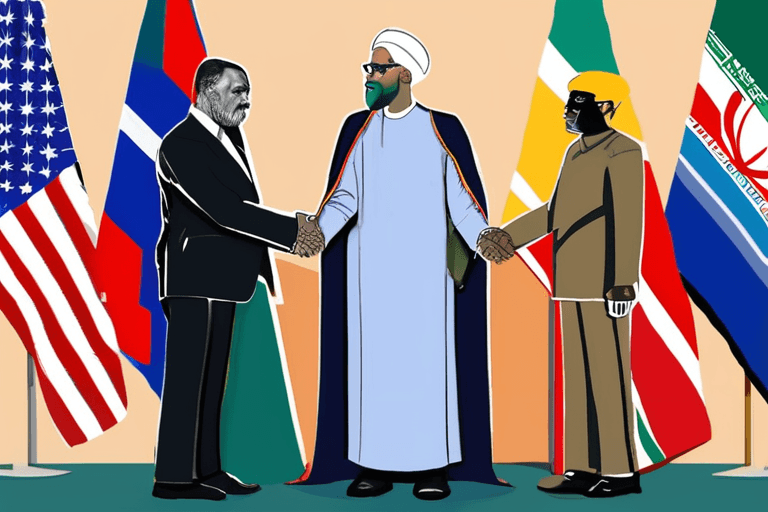
The joint naval exercises involving Iran, Russia, China and South Africa, among others, have drawn international scrutiny. These exercises are viewed by some as a demonstration of solidarity among nations seeking to challenge the existing U.S.-led global order. The BRICS nations, comprising Brazil, Russia, India, China, and South Africa, have increasingly sought to foster closer economic and political ties, presenting an alternative to Western-dominated institutions.
South Africa's foreign policy has historically emphasized non-alignment, seeking to maintain relationships with a diverse range of countries. However, this approach has come under increasing pressure as geopolitical tensions rise and nations are often compelled to take sides on contentious international issues. The invitation to Iran, a country facing international sanctions and criticism for its human rights record, has placed South Africa's foreign policy under a microscope.
The situation remains fluid, with the South African inquiry expected to shed further light on the circumstances surrounding the Iranian warships' presence. The outcome of the inquiry and South Africa's subsequent actions will likely have implications for its relationship with both the United States and other nations involved in the naval exercises.














Discussion
Join the conversation
Be the first to comment