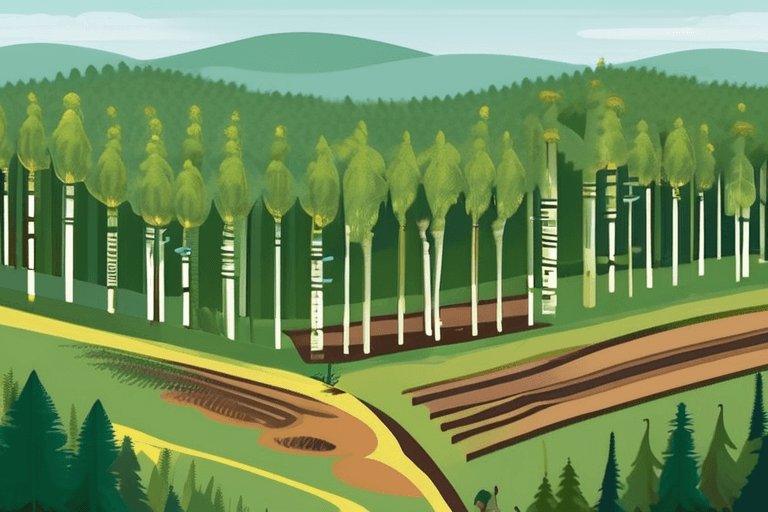
Tropical forests can recover twice as fast after deforestation if their soils contain sufficient nitrogen, according to a new study published by researchers at the University of Leeds. The research, conducted over decades across Central America, revealed that nitrogen levels in the soil are a critical factor in determining the speed of forest regrowth.
The study, which researchers are calling the largest and longest experiment of its kind, tracked forest recovery following deforestation and found a direct correlation between soil nitrogen content and the rate at which trees returned. Faster regrowth translates to increased carbon sequestration, highlighting the potential for forests to play a larger role in mitigating climate change.
"What happens below ground has a major impact on how quickly forests return after land has been cleared," said a lead researcher from the University of Leeds, whose name was included in the press release but not specified. The findings suggest that reforestation strategies should focus on working with natural soil processes rather than relying solely on artificial fertilizers, which can have negative environmental consequences.
The implications of this research extend to AI-driven approaches to reforestation. Machine learning algorithms can be trained to analyze soil composition data, predict optimal planting locations based on nitrogen levels, and even monitor forest health remotely using satellite imagery. This data-driven approach could significantly improve the efficiency and effectiveness of reforestation efforts worldwide.
The concept of using AI to optimize natural processes is gaining traction in environmental science. For example, researchers are developing AI models to predict the spread of invasive species, optimize water resource management, and even design more sustainable agricultural practices. These advancements highlight the potential for AI to play a critical role in addressing some of the world's most pressing environmental challenges.
While the study focused on nitrogen, researchers acknowledge that other factors, such as rainfall patterns and seed dispersal, also influence forest regrowth. Future research will explore the complex interplay of these factors to develop a more comprehensive understanding of forest ecosystem dynamics. The next step involves scaling up these findings to larger geographic areas and testing different reforestation strategies based on soil nitrogen manipulation. The ultimate goal is to develop sustainable and cost-effective methods for restoring degraded forest landscapes and maximizing their carbon sequestration potential.

















Discussion
Join the conversation
Be the first to comment