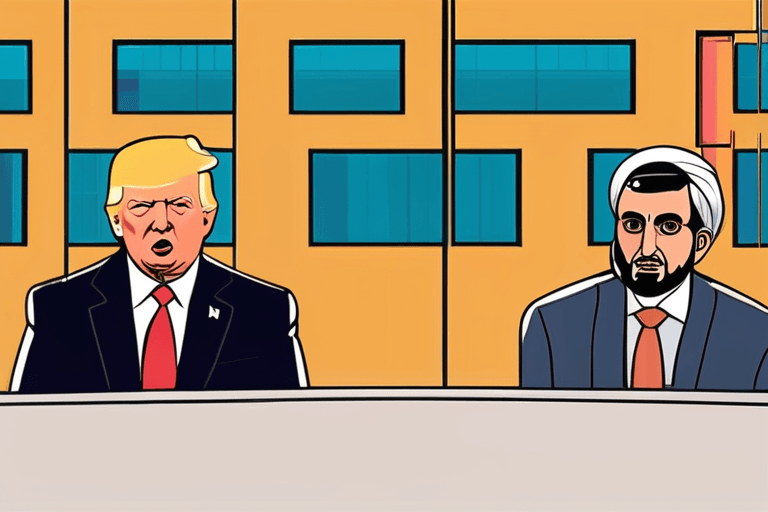
President Donald Trump has signaled a potential shift in his stance regarding military action against Iran, despite earlier threats of imminent strikes in response to the regime's violent crackdown on widespread protests. The apparent hesitation comes as the protests, ignited by public discontent, continue to spread across the nation, met with increasingly brutal suppression tactics by Iranian authorities.
Trump initially declared on January 2 that the U.S. was "locked and loaded" to strike Iran if the government continued its violent suppression of protesters. He reiterated similar warnings in subsequent online posts, even encouraging Iranian citizens to "TAKE OVER YOUR INSTITUTIONS!!!" However, the promised action has yet to materialize, leaving observers to speculate on the reasons behind the delay.
One possible explanation is the complex geopolitical landscape of the region. Military intervention in Iran could destabilize the already volatile Middle East, potentially drawing in other regional powers and exacerbating existing conflicts. The U.S. may be weighing the potential consequences of military action, including the risk of escalating tensions with Iran's allies and further inflaming anti-American sentiment in the region.
Another factor could be the potential impact on international relations. Unilateral military action by the U.S. without broad international support could alienate key allies and undermine diplomatic efforts to address Iran's nuclear program and other regional concerns. Securing international consensus for military intervention can be a lengthy and challenging process, requiring extensive negotiations and diplomatic maneuvering.
Domestically, the political climate in the United States may also be influencing Trump's decision-making. With upcoming elections, the president may be wary of launching a military conflict that could prove unpopular with voters. Public opinion on military intervention in the Middle East is often divided, and a prolonged or costly engagement could damage Trump's political standing.
Finally, the U.S. may be exploring alternative strategies for addressing the situation in Iran. These could include imposing further economic sanctions, providing support to Iranian protesters through covert channels, or pursuing diplomatic initiatives to de-escalate tensions and promote political reform. While Trump has publicly advocated for regime change, he may be considering a more nuanced approach that avoids direct military confrontation.
The Iranian government has blamed foreign actors for instigating the protests, a claim widely dismissed by international observers. The internet blackout imposed by the regime has severely hampered the ability of journalists and human rights organizations to document the extent of the protests and the government's response. The United Nations and various human rights groups have condemned the Iranian government's use of force against protesters and called for an independent investigation into the alleged abuses. The situation remains fluid, and the future course of U.S. policy toward Iran remains uncertain.



















Discussion
Join the conversation
Be the first to comment