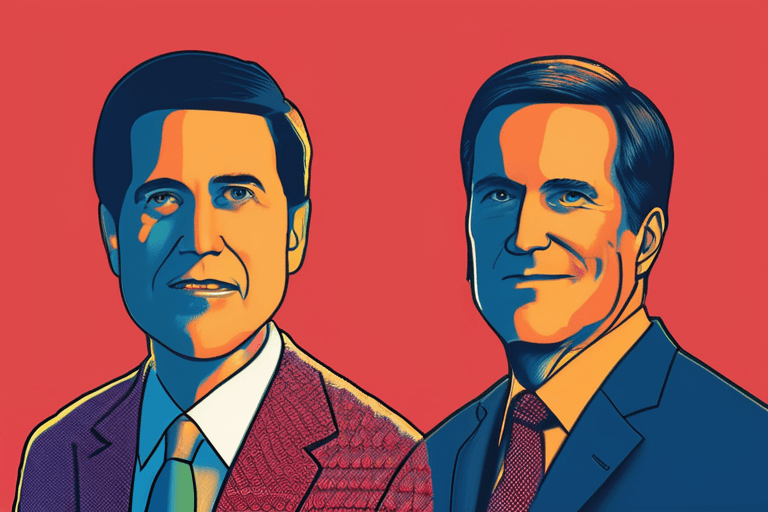
An advertisement released Friday by Texas Attorney General Ken Paxton, a Republican Senate candidate, featured digitally fabricated scenes of Senator John Cornyn, a Republican whom Paxton is challenging, dancing with Representative Jasmine Crockett, a Democrat also running for Senate. The advertisement, intended to highlight perceived political alignment between Cornyn and Crockett, utilized artificial intelligence to create the false depiction, showcasing what appeared to be a Texas dance hall and the U.S. Capitol as backdrops.
The AI-generated video interspersed the fabricated dancing clips with genuine videos of Crockett praising Cornyn, as well as news reports of Cornyn speaking favorably about her. This tactic, according to political analysts, aimed to create a narrative of collaboration and shared ideology between the two candidates, despite their differing party affiliations.
The use of AI in political advertising raises significant concerns about the potential for misinformation and manipulation in elections. AI's ability to generate realistic but entirely fabricated content, often referred to as "deepfakes," poses a challenge to voters' ability to discern fact from fiction. Experts warn that such technologies could erode trust in political institutions and the electoral process.
"The emergence of AI-powered political ads marks a new frontier in campaign tactics," said Dr. Emily Carter, a professor of political science at the University of Texas. "While political ads have always been subject to scrutiny for accuracy, the ease with which AI can create convincing but false scenarios necessitates a renewed focus on media literacy and critical thinking skills among voters."
The technology behind these AI-generated videos typically involves sophisticated algorithms that analyze vast amounts of visual and audio data to create realistic simulations of individuals. Generative adversarial networks (GANs), a type of machine learning model, are often employed to produce these deepfakes. GANs involve two neural networks, a generator and a discriminator, that compete against each other to create increasingly realistic fake content.
This is not the first instance of a high-profile candidate utilizing AI in campaign videos; Andrew M. Cuomo previously employed similar tactics. However, the increasing accessibility and sophistication of AI tools suggest that such instances are likely to become more prevalent in future elections.
The advertisement has sparked debate about the need for regulation of AI in political advertising. Some argue that existing laws regarding false advertising may not be sufficient to address the unique challenges posed by AI-generated content. Others advocate for stricter regulations, including mandatory disclaimers indicating when AI has been used to create or alter content.
As of Monday, Senator Cornyn's campaign had not issued a formal response to the advertisement. Representative Crockett's campaign released a statement condemning the use of AI to create misleading content, calling it a "dangerous precedent" for future elections. The Texas Ethics Commission is currently reviewing the advertisement to determine whether it violates any state laws.

















Discussion
Join the conversation
Be the first to comment