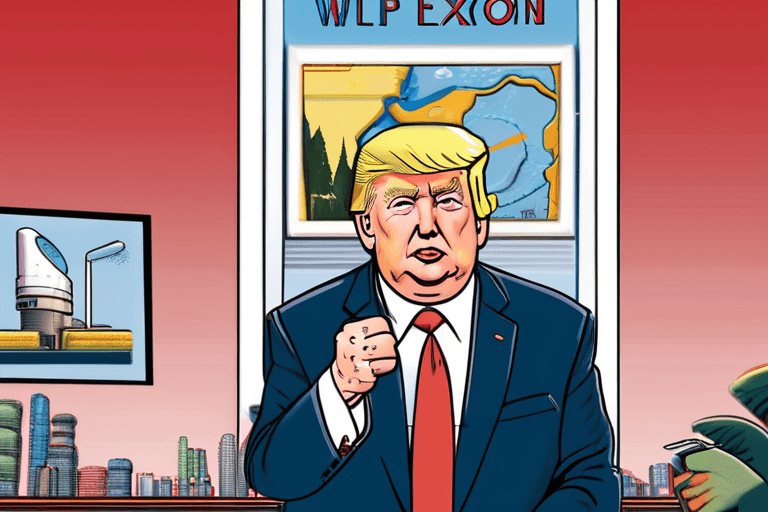
President Donald Trump indicated he might exclude Exxon Mobil from future investments in Venezuela, following comments from CEO Darren Woods deeming the country "uninvestable." Trump, speaking to reporters Sunday, criticized Exxon's response as "too cute," a reference to Woods' remarks at a White House event earlier this month.
The disagreement highlights a fundamental conflict between the Trump administration's objectives and the priorities of major U.S. oil companies. Trump has publicly stated his expectation that U.S. oil companies would invest $100 billion in Venezuela following the removal of President Nicolás Maduro. However, oil executives are focused on maximizing shareholder value through cost-cutting measures, dividend payouts, and share repurchases, rather than large-scale investments in politically unstable regions.
The current impasse leaves the future of U.S. oil investment in Venezuela uncertain. Trump faces the choice of incentivizing investment or penalizing companies for their reluctance. Vicki Hollub, the chief executive of Occidental Petroleum, echoed the industry's cautious approach, stating, "We’re not going to aggressively put lots of extra barrels into an oversupplied market." This statement reflects concerns about depressing oil prices, which run counter to the oil companies' financial interests.
The U.S. oil industry's hesitancy stems from a combination of factors, including political instability, security risks, and the potential for asset seizures by the Venezuelan government. These risks make large-scale investments in Venezuela unattractive, despite the country's vast oil reserves. The companies are prioritizing financial discipline and shareholder returns over speculative ventures in high-risk environments.
The conflicting priorities between the Trump administration and the oil industry will likely shape the future of U.S. involvement in Venezuela's oil sector. The administration's next steps could include offering tax breaks or other financial incentives to encourage investment, or potentially imposing sanctions or other penalties on companies that decline to participate. The outcome will depend on the administration's ability to align its political goals with the economic realities facing the oil industry.


















Discussion
Join the conversation
Be the first to comment