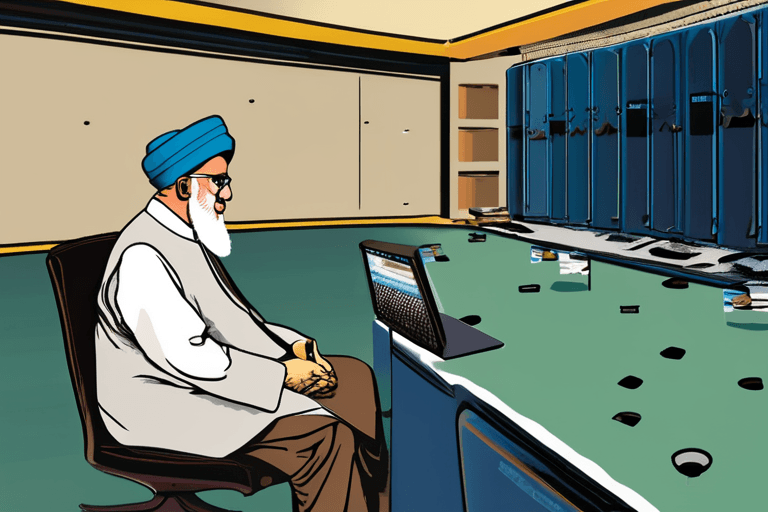
During the 12-day war with Israel and the United States last June, Iran's Supreme Leader Ayatollah Ali Khamenei reportedly retreated to a bunker beneath his compound in Tehran, avoiding public appearances and electronic communication, a move that analysts see as emblematic of his long and unyielding rule. Khamenei, 86, has led the Islamic Republic for 37 years, establishing a system resistant to change, characterized by ideological rigidity and hostility toward the United States.
Analysts contend that Khamenei's leadership is marked by a refusal to compromise on his core ideological principles. Sanam Vakil, the director of the Middle East and North Africa Program at Chatham House, stated, "He is an obstructionist; I do not see him late in life compromising on ideology and his legacy." Vakil added, "Whatever it takes to stay in power down to the last Iranian, he's very keen to keep this system intact, and sees it as an existential and ideological struggle."
Khamenei's tenure has been punctuated by recurring nationwide protests, reflecting underlying tensions within Iranian society. These protests, which have increased in frequency, highlight the challenges to the existing political order and the desire for change among segments of the population.
The Supreme Leader's commitment to maintaining the status quo is viewed by some as a strategy to preserve the regime's power and ideological purity. This approach, however, has also been criticized for stifling political and social reforms, contributing to internal discontent and international isolation. The future trajectory of Iran under Khamenei's continued leadership remains uncertain, with potential implications for both domestic stability and regional dynamics.















Discussion
Join the conversation
Be the first to comment