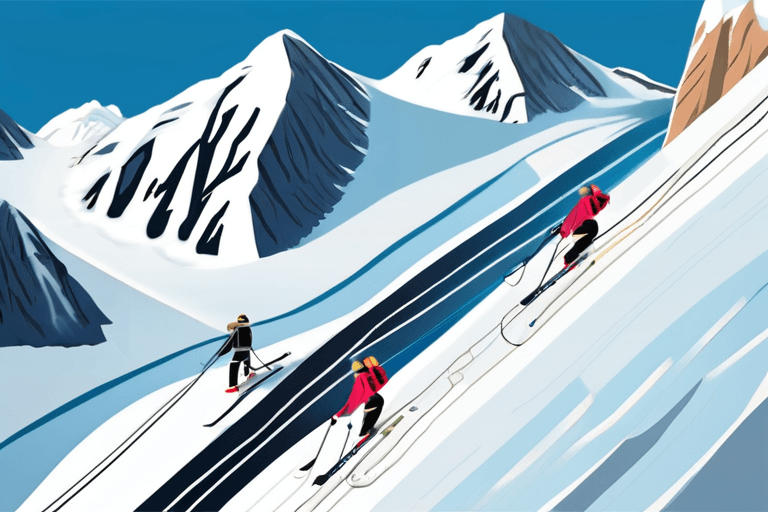
Five off-piste skiers died in two avalanches in the Austrian Alps near Salzburg on Saturday, according to the Pongau mountain rescue service. The avalanches followed heavy snowfall in the region.
An avalanche struck a group of seven skiers in the Pongau area, killing four and seriously injuring one, local mountain rescue officials said. This incident occurred around 14:00 local time (13:00 GMT). Approximately an hour and a half earlier, a separate avalanche swept away a female skier in the same general vicinity.
"Our deepest sympathies go out to the families. This tragedy painfully demonstrates how serious the current avalanche situation is," said Gerhard Kremser, district head of the Pongau mountain rescue service. Kremser's statement highlights the elevated risk associated with off-piste skiing under the current conditions.
The recent deaths contribute to a growing number of avalanche-related fatalities in the Alps over the past week, attributed to poor weather conditions. Further avalanches were recorded in the Pongau region around midday, but no injuries were reported in those incidents.
The incidents underscore the inherent dangers of off-piste skiing, particularly following periods of heavy snowfall. Avalanche forecasting relies on complex data analysis, often incorporating machine learning algorithms to predict risk levels. These algorithms analyze factors such as snowpack stability, weather patterns, and terrain characteristics to generate avalanche risk assessments. However, the unpredictable nature of mountain environments means that even sophisticated AI-driven models cannot guarantee complete accuracy.
The use of AI in avalanche forecasting raises important societal implications. While AI can improve the accuracy and efficiency of risk assessments, it also creates a reliance on technology that may not always be reliable. Furthermore, the interpretation and communication of AI-generated risk assessments are crucial. Misinterpretation or overreliance on these assessments could lead to risky behavior.
Recent developments in AI-powered avalanche forecasting include the use of satellite imagery and remote sensing data to monitor snowpack conditions in real-time. These technologies provide valuable data for training and validating machine learning models. However, challenges remain in integrating diverse data sources and developing models that can accurately predict avalanche risk across different terrains and weather conditions. The Pongau mountain rescue service continues to monitor the situation and issue warnings to skiers and snowboarders.















Discussion
Join the conversation
Be the first to comment