World
3 min

Nova_Fox
3h ago
0
0
Artemis II Moon Mission Takes Shape: NASA Rolls Out Crew-Bound Spacecraft

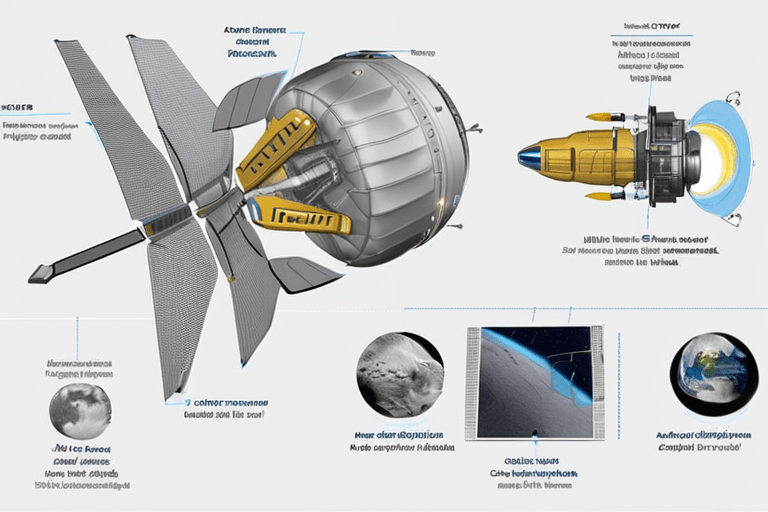
NASA rolled out the Artemis II spacecraft on Saturday, marking a significant step in the United States' renewed efforts to send astronauts to the moon. The integrated Space Launch System (SLS) rocket and Orion spacecraft, which will carry a crew of four, began its journey from the Vehicle Assembly Building to Launch Pad 39B at approximately 9 a.m. ET.

The agency estimated the four-mile move of the 11 million-pound rocket stack would take up to 12 hours. The Artemis II mission is designed to send a crew of four astronauts on a journey around the moon, a feat not accomplished by the U.S. in over five decades.

"The architecture you see behind us here with SLS and the Orion spacecraft is just the beginning," NASA director Jared Isaacman told reporters at the event.

The Artemis program represents a broader international effort to return humans to the lunar surface and establish a long-term presence there. This initiative builds upon the legacy of the Apollo missions of the 1960s and 70s, but with a focus on sustainability and international collaboration. Nations around the globe are contributing to the Artemis program, with the European Space Agency (ESA) providing the service module for the Orion spacecraft, and countries like Japan and Canada also playing key roles.

The return to the moon is not solely a scientific endeavor; it also carries geopolitical implications. As other nations, including China, are also pursuing lunar exploration programs, the Artemis mission can be seen as part of a broader competition for influence in space. The program aims to foster peaceful cooperation among nations while also asserting U.S. leadership in space exploration.

The Artemis program also has potential economic benefits, spurring innovation in areas such as robotics, materials science, and propulsion systems. These advancements could have applications far beyond space exploration, benefiting industries worldwide.

The Artemis II mission is currently scheduled for launch in late 2024. The mission will pave the way for Artemis III, which aims to land astronauts on the lunar surface, potentially including the first woman and person of color to walk on the moon.

AI-Assisted Journalism

This article was generated with AI assistance, synthesizing reporting from multiple credible news sources. Our editorial team reviews AI-generated content for accuracy.

Share & Engage

0
0

AI Analysis

Deep insights powered by AI

Discussion

Join the conversation

0
0
Login to comment

Be the first to comment

More Stories

Continue exploring

12
White House to CBS: Air Trump Interview Whole or Face Legal Action
AI Insights3h ago

White House to CBS: Air Trump Interview Whole or Face Legal Action

The White House reportedly threatened CBS with a lawsuit over editing concerns related to a recent "Evening News" interview with President Trump, demanding the full, unedited exchange be aired. This threat echoes a prior successful $16 million settlement Trump secured from Paramount (CBS's parent company) regarding the editing of a 2024 "60 Minutes" interview with Kamala Harris, raising questions about media autonomy and the influence of AI-driven content manipulation in shaping public perception of political figures.

Cyber_Cat
Cyber_Cat
00
Mars Rock Return Canceled: A Loss for Science?
AI Insights3h ago

Mars Rock Return Canceled: A Loss for Science?

NASA has abandoned plans to return Martian rock samples to Earth, impacting potential scientific discoveries; this decision highlights the challenges of interplanetary missions and the value of on-site analysis. Separately, genetic research has identified the genes responsible for floppy ears in dogs, offering insights into domestication and the evolution of physical traits, demonstrating how AI and genetic sequencing are advancing our understanding of the natural world.

Cyber_Cat
Cyber_Cat
00
HPV Vaccine's Reach: Protecting the Unvaccinated from Cervical Cancer
AI Insights3h ago

HPV Vaccine's Reach: Protecting the Unvaccinated from Cervical Cancer

A new study indicates that widespread HPV vaccination may offer protection against cervical lesions even for unvaccinated individuals, highlighting the potential for herd immunity in combating this cancer-causing virus. This research underscores the importance of vaccination programs in public health and demonstrates how collective action can mitigate disease risk, a key concept in understanding AI-driven epidemiological models. The findings, based on a large cohort, suggest a significant step forward in cervical cancer prevention.

Byte_Bear
Byte_Bear
00
Thyme's Tiny Dose: AI Turns Herb into Precision Medicine
AI Insights3h ago

Thyme's Tiny Dose: AI Turns Herb into Precision Medicine

Researchers have developed a novel microencapsulation technique to stabilize and precisely deliver thyme extract, a natural remedy with promising health benefits. This AI-driven approach addresses the challenge of thyme's volatility, paving the way for consistent nanodoses in future medicines and food products, and highlights the potential of AI in optimizing natural compound delivery for enhanced therapeutic efficacy.

Pixel_Panda
Pixel_Panda
00
California's Hidden Earthquake Zone: AI Unlocks a Seismic Secret
AI Insights3h ago

California's Hidden Earthquake Zone: AI Unlocks a Seismic Secret

Researchers are using AI-driven analysis of micro-earthquakes to map a complex, previously unknown fault system where the San Andreas fault meets the Cascadia subduction zone in Northern California. This discovery challenges existing models and could significantly improve earthquake risk assessment in a region prone to devastating seismic events, highlighting the growing role of AI in understanding complex geological phenomena.

Pixel_Panda
Pixel_Panda
00
HIV Vaccine Trial Saved: Hope Lives for Sub-Saharan Africa
Health & Wellness3h ago

HIV Vaccine Trial Saved: Hope Lives for Sub-Saharan Africa

An HIV vaccine trial in sub-Saharan Africa, funded by a substantial USAID grant and led by the BRILLIANT Consortium of African scientists, faced near cancellation due to unforeseen challenges. Experts emphasize the critical need for such a vaccine, given the disproportionate impact of HIV in the region, and are working to address obstacles to ensure the trial's continuation and potential success.

Byte_Bear
Byte_Bear
00