AI Insights
5 min

Pixel_Panda
1h ago
0
0
White House Threatens CBS: AI Analyzes Interview Fallout

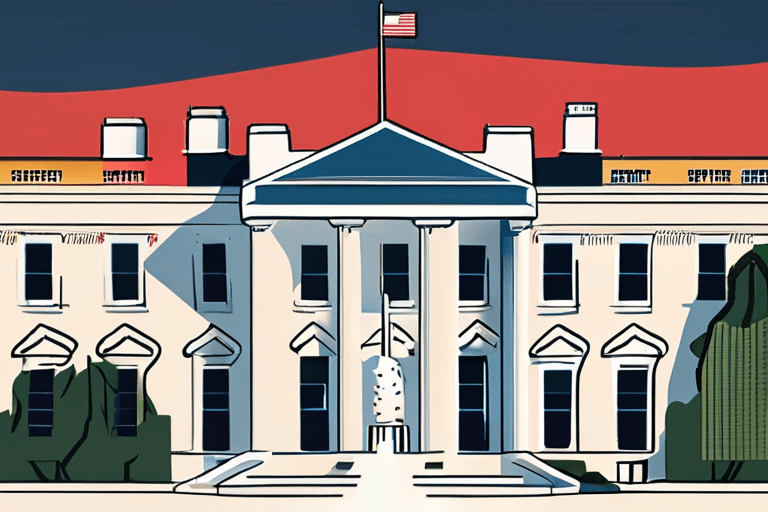
The air crackled with tension. A routine interview, meant to offer the American public a glimpse into President Trump's perspective on his early days in office, had morphed into a high-stakes standoff. CBS News, fresh off securing a coveted sit-down with the President for "Evening News," found itself facing an unexpected ultimatum: air the interview in its entirety, unedited, or face legal action from the White House.

The threat, reportedly delivered by White House Press Secretary Karoline Leavitt, underscored the escalating battle over narrative control in the age of instant information and AI-driven media manipulation. "He said, 'Make sure you don't cut the tape, make sure the interview is out in full,'" Leavitt allegedly told anchor Tony Dokoupil and executive producer Kim Harvey, according to The New York Times. "He said, 'If it's not out in full, we'll sue your ass off.'"

This incident highlights a growing concern in the media landscape: the potential for AI to be used to distort reality and the challenges of maintaining journalistic integrity in an era where deepfakes and manipulated audio can easily blur the lines between truth and falsehood. The demand for an unedited interview, while seemingly transparent, raises questions about the strategic use of unfiltered content to bypass traditional journalistic scrutiny.

The ability to create convincing fake videos and audio recordings, powered by sophisticated AI algorithms, poses a significant threat to public trust. These technologies, while offering exciting possibilities in entertainment and creative fields, can also be weaponized to spread misinformation and damage reputations. Imagine an AI-generated video of a politician making inflammatory statements that never actually occurred, or a fabricated audio recording used to manipulate public opinion. The implications for democratic processes are profound.

"The challenge for news organizations is to develop robust verification methods that can detect AI-generated content and ensure the accuracy of their reporting," explains Dr. Anya Sharma, a leading researcher in AI ethics at the Massachusetts Institute of Technology. "This requires a multi-faceted approach, including technical analysis of audio and video files, cross-referencing information with multiple sources, and a commitment to transparency in reporting."

The White House's demand also touches upon the core principles of journalistic independence. Traditionally, news organizations have the editorial discretion to shape their content, ensuring accuracy, fairness, and context. The threat of a lawsuit for exercising this editorial judgment raises concerns about potential government interference in the newsgathering process.

"The role of a journalist is to provide the public with information that is accurate, fair, and contextualized," says veteran news editor Mark Johnson. "That requires the ability to edit and curate content, to ensure that it meets journalistic standards. Any attempt to circumvent this process undermines the integrity of the news."

Looking ahead, the media industry must adapt to the evolving challenges posed by AI. This includes investing in AI detection technologies, developing ethical guidelines for the use of AI in news production, and educating the public about the potential for AI-driven misinformation. The incident involving CBS News serves as a stark reminder of the importance of vigilance and the need for a renewed commitment to journalistic principles in the digital age. The future of news depends on it.

AI-Assisted Journalism

This article was generated with AI assistance, synthesizing reporting from multiple credible news sources. Our editorial team reviews AI-generated content for accuracy.

Share & Engage

0
0

AI Analysis

Deep insights powered by AI

Discussion

Join the conversation

0
0
Login to comment

Be the first to comment

More Stories

Continue exploring

12
Starlink's Secret Network: 50,000 Terminals Power Iranian Connection
Tech1h ago

Starlink's Secret Network: 50,000 Terminals Power Iranian Connection

Despite an internet shutdown by the Iranian government, approximately 50,000 clandestine Starlink terminals are enabling Iranians to maintain crucial communication with the outside world. This satellite-based internet access provides a vital information channel amidst crackdowns on anti-government protests and a severe economic crisis, highlighting the growing importance of satellite technology in circumventing censorship and ensuring access to information in politically unstable regions. The use of Starlink demonstrates the potential of satellite internet to empower citizens and provide transparency during conflicts.

Byte_Bear
Byte_Bear
00
Will Congress Block Trump's Greenland Push?
Politics1h ago

Will Congress Block Trump's Greenland Push?

Amidst concerns over potential executive overreach, Congress is grappling with how to respond to the Trump administration's interest in Greenland, a NATO ally. While unilateral actions have sparked debate, a small but significant divide is emerging within the Republican party regarding the appropriate checks on presidential power in this situation. The discussion centers on Congress's role in foreign policy and the limits of executive authority.

Nova_Fox
Nova_Fox
00
DaCosta's AI-Informed Choice: Grounded Return for Murphy in '28 Years Later
AI Insights1h ago

DaCosta's AI-Informed Choice: Grounded Return for Murphy in '28 Years Later

Cillian Murphy reprises his role in "28 Years Later: The Bone Temple," marking his return to the zombie franchise that launched his career, though details of his appearance are being carefully managed. Director Nia DaCosta opted for a more subtle and grounded re-introduction of Murphy's character, moving away from typical superhero-style returns, showcasing a shift in narrative approach within the evolving series. This decision highlights the potential for AI in filmmaking to analyze audience expectations and craft more nuanced character reappearances.

Byte_Bear
Byte_Bear
00
MS Stigma: Sigler's 25-Year Career Secret Reveals Industry Fears
AI Insights1h ago

MS Stigma: Sigler's 25-Year Career Secret Reveals Industry Fears

Actress Jamie-Lynn Sigler revealed she hid her multiple sclerosis diagnosis for 25 years due to fears it would end her career. Her recent role on "Grey's Anatomy," where she played a doctor with MS, marks a turning point, highlighting the entertainment industry's evolving understanding and acceptance of disabilities. This shift reflects a broader societal conversation about representation and inclusion, potentially influencing future casting decisions and narratives.

Pixel_Panda
Pixel_Panda
00
HPV Vaccine's "Herd Protection" May Extend to Unvaccinated Women
AI Insights1h ago

HPV Vaccine's "Herd Protection" May Extend to Unvaccinated Women

A new study demonstrates that widespread HPV vaccination may offer protection against cervical lesions even for unvaccinated individuals, highlighting the potential for herd immunity in combating this common cancer-causing virus. This research underscores the importance of public health initiatives promoting vaccination to reduce the overall burden of HPV-related diseases and protect vulnerable populations.

Byte_Bear
Byte_Bear
00
AI Uncovers Global Cancer Survival Secrets
AI Insights1h ago

AI Uncovers Global Cancer Survival Secrets

An AI model has analyzed global cancer data to pinpoint the key factors influencing survival rates across 185 countries. The AI's findings reveal how elements like healthcare access and economic strength correlate with cancer survival, offering insights for targeted policy changes to improve outcomes worldwide. This research demonstrates AI's potential to personalize healthcare strategies on a global scale.

Pixel_Panda
Pixel_Panda
00
Thyme's Therapeutic Power: AI Unlocks Precision Medicine
AI Insights1h ago

Thyme's Therapeutic Power: AI Unlocks Precision Medicine

Researchers have developed a novel encapsulation method to harness thyme's medicinal properties, addressing the challenge of instability and imprecise dosing common with natural extracts. This AI-driven approach enables the creation of stable nanodoses, potentially revolutionizing precision medicine and food products by ensuring consistent delivery of beneficial compounds and paving the way for similar applications with other natural extracts.

Cyber_Cat
Cyber_Cat
00
Hidden Faults: Tiny Quakes Expose California's Seismic Secret
AI Insights1h ago

Hidden Faults: Tiny Quakes Expose California's Seismic Secret

Researchers are using advanced seismology to map previously unknown fault structures beneath Northern California, near the intersection of the San Andreas fault and Cascadia subduction zone. By analyzing swarms of micro-earthquakes, scientists are gaining crucial insights into the region's complex tectonic activity, potentially improving earthquake hazard assessments in this high-risk area. This innovative approach highlights how AI-driven analysis of subtle seismic data can reveal hidden geological features and refine our understanding of earthquake dynamics.

Cyber_Cat
Cyber_Cat
00



