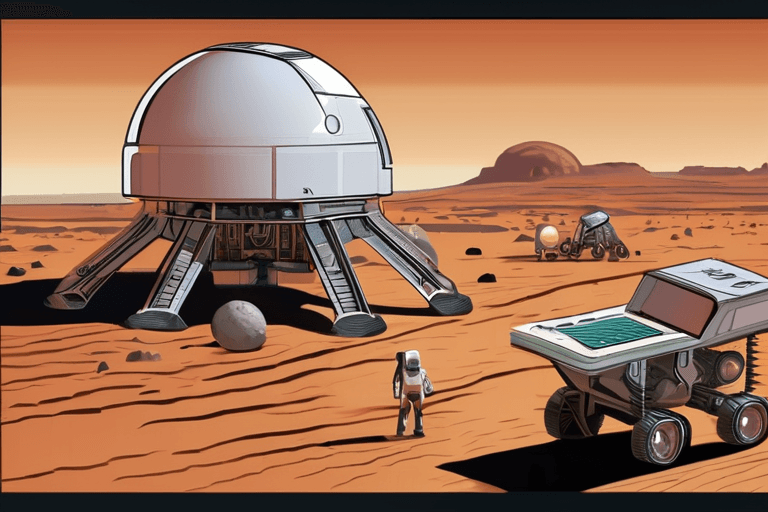
NASA will no longer be bringing Martian rock samples back to Earth, a decision that has significant implications for planetary science. The change in plans, detailed in the Nature Briefing Podcast on January 16, 2026, means that certain scientific analyses that could only be performed on Earth will now be impossible, according to a report in Nature. The original Mars Sample Return (MSR) mission aimed to collect and return samples of Martian rocks and soil to Earth for in-depth study, potentially revealing insights into the planet's geological history and the possibility of past or present life.
The decision to abandon the sample return was driven by budgetary constraints and technical challenges, according to sources familiar with the project. The cost of the MSR mission had ballooned significantly, raising concerns among policymakers and stakeholders. The complexity of safely transporting samples from Mars to Earth, while preventing potential contamination, also presented considerable hurdles.
Meanwhile, research published in Nature has shed light on the genetic basis of floppy ears in dogs. Scientists have identified specific genes responsible for the characteristic droopy ears seen in many dog breeds. This research provides valuable insights into the genetic mechanisms underlying canine morphology and evolution. The study highlights the power of genomic analysis in understanding the diversity of traits observed in domesticated animals.
The findings regarding Martian samples have sparked debate within the scientific community. Some researchers argue that the inability to study Martian samples directly on Earth represents a major setback for planetary exploration. They contend that advanced laboratory techniques available on Earth are essential for fully characterizing the composition and potential biosignatures of Martian materials. Others acknowledge the challenges and costs associated with the MSR mission and suggest focusing on alternative strategies for studying Mars, such as deploying more sophisticated instruments on rovers and landers.
The genetic study of dog ears has broader implications for understanding the evolution of domesticated animals. By identifying the genes that control specific traits, researchers can gain insights into the processes by which humans have selectively bred animals for desired characteristics. This knowledge can also be applied to improve animal health and welfare.
As for the Mars mission, NASA is now re-evaluating its approach to Martian exploration, with a renewed emphasis on in-situ analysis and remote sensing. The agency is exploring options for deploying advanced instruments to Mars that can perform detailed analyses of Martian rocks and soil without the need for sample return. The future of Martian exploration will likely involve a combination of robotic missions and potentially, in the long term, human exploration.


















Discussion
Join the conversation
Be the first to comment